Research rabbit holes and drunk archaeologists: The making of my KV35 Egyptian tomb video.
Sometimes "doing history" is perfectly infuriating. Even then, it's kind of fun.
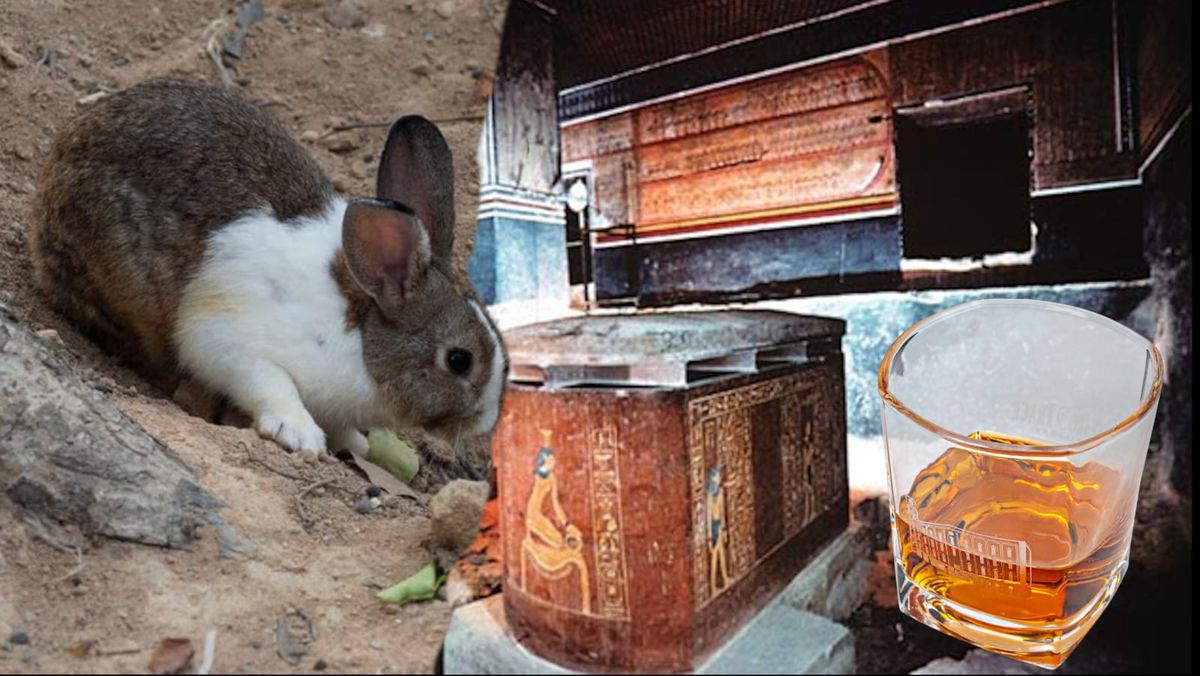
This is a bit of an unusual article for the Garden. As you probably know, I often run articles as companion pieces to videos I post on my YouTube channel. This one, however, is going to be less about the substantive subject of a video I just did, and more of the story of what happened as I was making it.
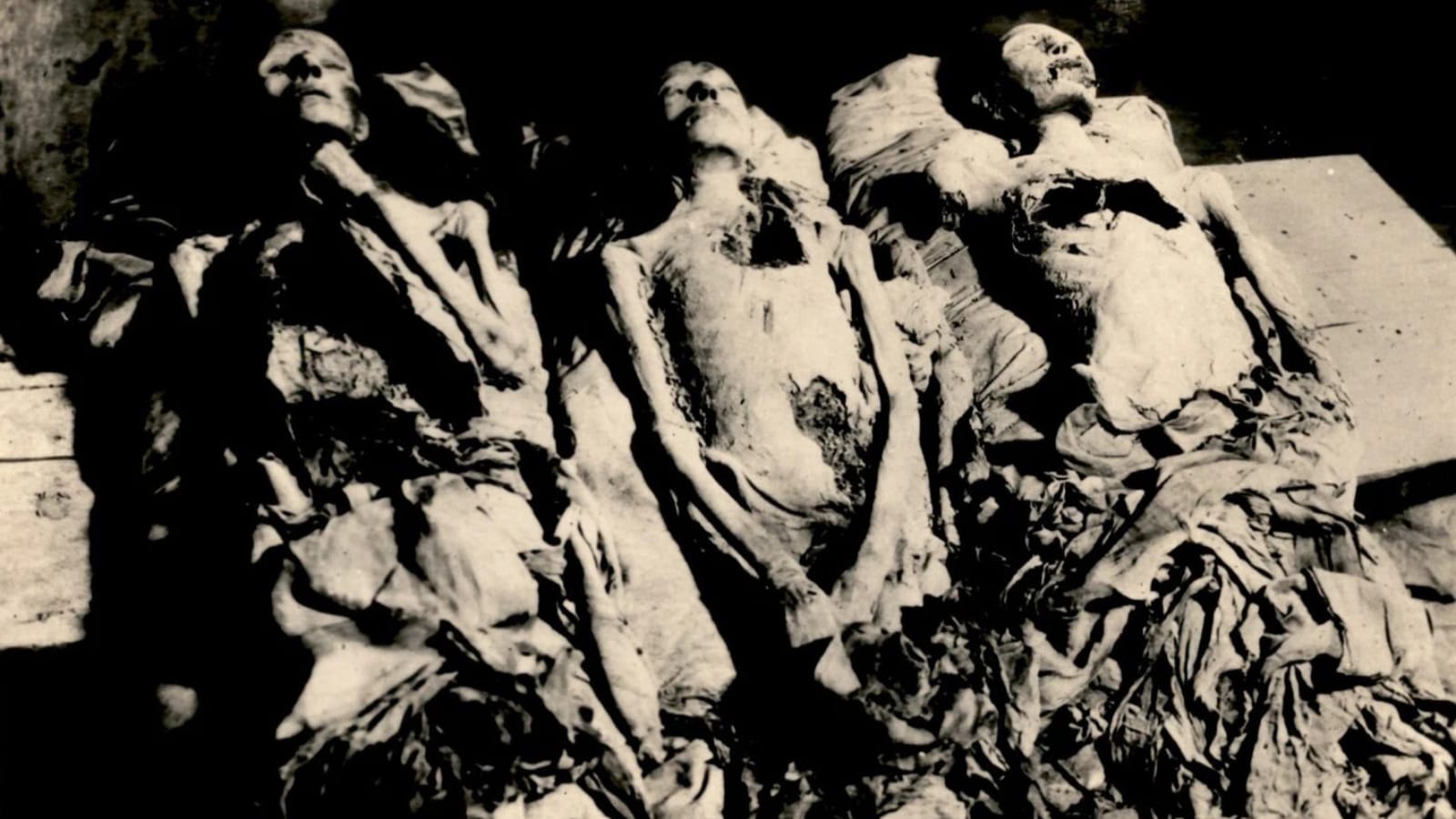
Yesterday, June 4, 2026, I put up on my YouTube channel a video titled “KV35: Ancient Egypt’s Chamber of Horrors.” It’s about the discovery and contents of a royal tomb from Egypt, known as KV (King’s Valley/Valley of the Kings) no. 35, discovered by French archaeologist Victor Loret in March 1898. KV35 was what Egyptologists call a “mummy cache,” a place where state officials moved royal mummies to guard them from rapacious and insatiable tomb robbers that had been ravaging Egypt’s burial grounds for centuries. If this subject sounds familiar to long-time readers of the Garden of Memory, it should. The video was pretty much based on—or at least springboarded from—an article I did here back in 2023 with that same title. I just put out a video about Akhenaten, the “heretic pharaoh” of the Eighteenth Dynasty, and doing KV35 as a side video seemed like a good move, because most of the research was already done.
It turned out to be a very good move. The KV35 video has proven, a bit more than 24 hours in, to be very successful in garnering views and especially in converting new subscribers. If you’d like to see it, I embed it below. This article isn’t about the substantive history of KV35, which I already covered in that previous article (and now the video), but rather, about the strange process of making it, as what I started to call in my mind “the damn KV35 thing” proved to be a pretty unusual experience.
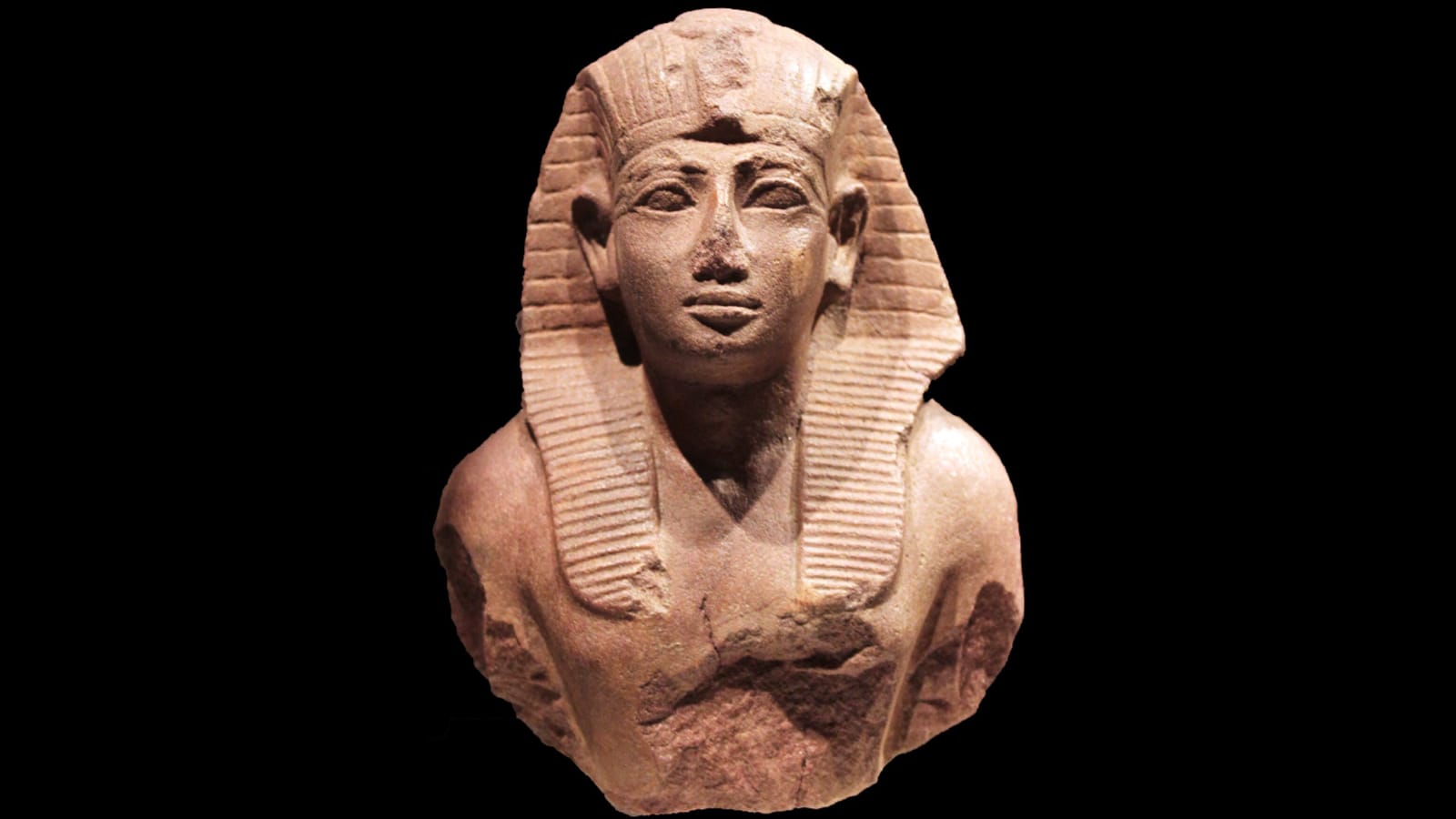
The impetus for the project really started when I decided, back in January, to do the Akhenaten video. I was fascinated by the macabre mysteries of KV35 from the first time I read about it, years ago, but when gaining a research assistant with a particular expertise—Jon Burke, an intrepid Australian—suddenly enabled me to do some ancient history on my channel, I immediately decided that Akhenaten and KV35 could go together as companion pieces. Though Akhenaten himself was not buried in KV35, both of his parents, Amenhotep III and Queen Tiye, plus his sister and possibly his brother, ended up there. In terms of research I tasked Jon to focus on Akhenaten and figured I’d take the laboring oar on KV35, which I always envisioned as a shorter, smaller-scale and less in-depth video, kind of a lagniappe for the viewers of the channel.
When I began the research in earnest in late March, as the Millard Fillmore video was finishing, I immediately ran into a problem. I intended that a section of the video would quote the words of Victor Loret, describing his dramatic and spooky entry into the tomb, and especially how he saw the twisted, torn faces of 3,000-year-old mummies staring back at him in the light of a flickering candle. I knew that account existed. Excerpts of it appeared in a book I’ve owned for years, Valley of the Kings by John Romer, originally published in 1981. That was the main source I used to write my 2023 article from which the video takes its name.I obviously wanted more than just the few sentences Loret quoted (in English). So I went searching on WorldCat, a pretty much universal academic library database, for the original journals written by Victor Loret that had been translated into English. If I couldn’t find it online, which I assumed I wouldn’t be able to, I could just order a copy delivered to my library via InterLibrary Loan. Easy, right? I mean, I do this multiple times a week.
Sure enough, on WorldCat I found this listing.
The Valley of the Kings Rediscovered: The Victor Loret Excavation Journals (1898-1899) and Other Manuscripts. Piacentini, Patrizia; Orsenigo, Christian; Quirke, Stephen. © 2005.
I was glad to find this notation, although it puzzled me. The copyright date was 2005. Loret wrote his stuff in 1898 or ‘99. It couldn’t have taken 107 years for his journals to be translated into English, right? I mean, Romer quoted them, in English, in his book in 1981. Where’d he get the translation? Still, I didn’t think too hard on this, as I now had the target in my sights.
What was interesting, though, was that WorldCat told me this book, The Valley of the Kings Rediscovered,was only held by 19 libraries in the entire world. I figured the chances of getting one of them were low, but I put in an InterLibrary Loan order anyway. If I didn’t get it, however, I came up with a backup plan. One of the 19 libraries that owns this book is the library of New York University’s Institute for the Study of the Ancient World. It just so happens—a strategic choice combined with a lucky accident—that another of my research assistants, John Marcucci, happens to be a student at NYU. So, I could send him into the NYU ISAW library to look at this book and, if he could convince library staff to let him do so, scan, photograph or transcribe the portions of it I needed. This is exactly the kind of rabbit-hole hunt for sources that having great research assistants makes possible.
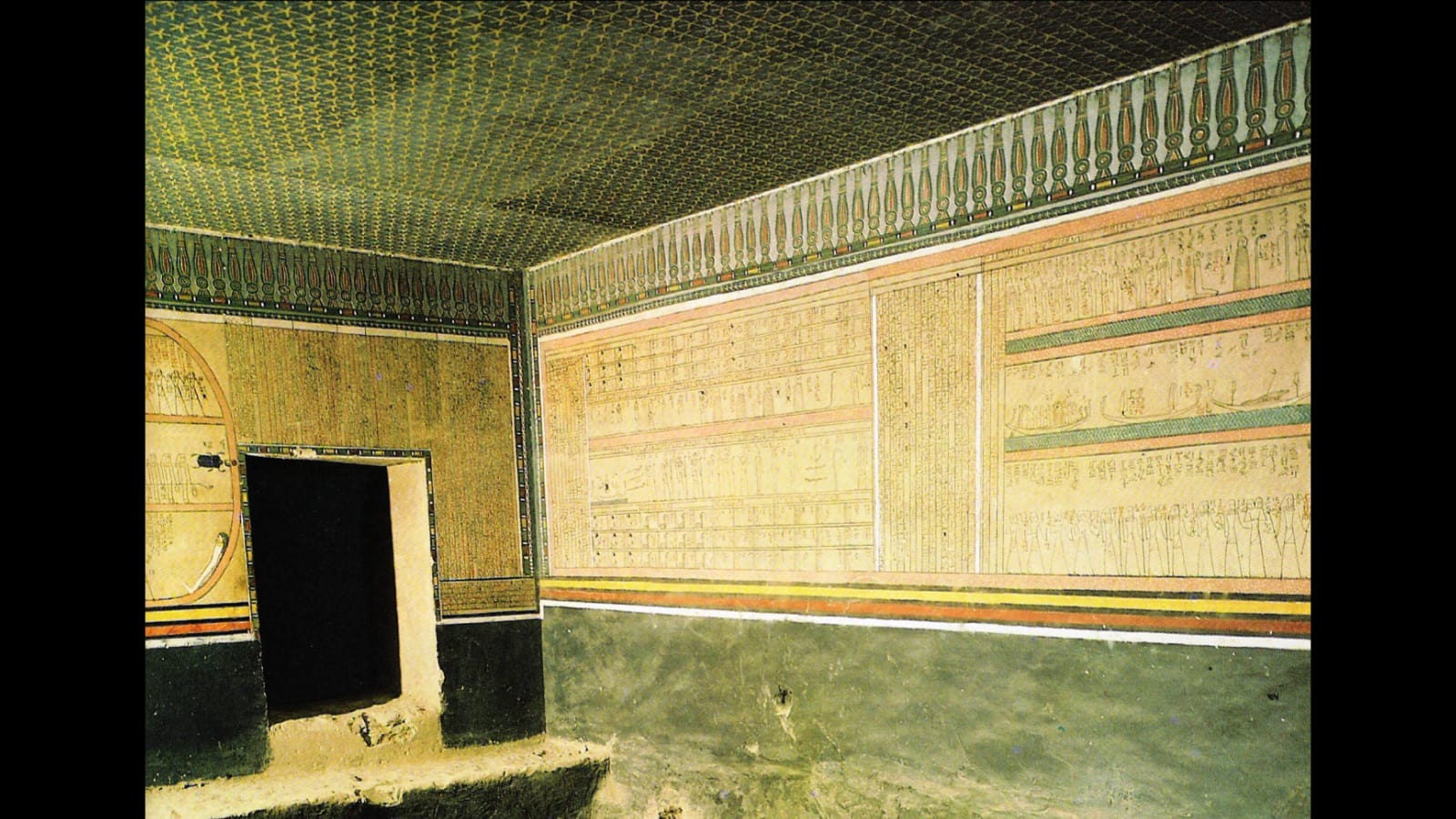
At the same time I also began searching for images that I could use in the video. Many of the Egyptian tombs are documented by a research foundation, attached to the American University in Cairo, called the Theban Mapping Project. Their website on KV35, here, contained numerous lavish, high-resolution photos of the interior of the tomb, which is decorated with magnificent ancient paintings as well as an unusual field of stars painted on the ceiling. The sarcophagus of Amenhotep II—the king for whom the tomb was originally built, in about the year 1397 BCE—is still there, and I obviously needed pictures of that for the video. While some photos of the tomb not in the custody of the Theban Mapping Project exist, I thought I’d try my luck to see if I could get licensing rights to use the ones they had, so I emailed them. I’ve had limited success with this tactic in the past. Although some online archives with photos, like the TWA Museum, have been very cooperative and charge reasonable licensing fees, some archives I’ve dealt with (I won’t single anyone out) have not been. It’s a crap shoot every time, but usually worth a try.
Before Marcucci could get a chance to visit the NYU ISAM library, I received an email from InterLibrary Loan. I expected they were turning down my request. To my shock, it was a routine email announcing that the hold was in. I was excited when I drove down to my local library to pick it up. Only 19 copies in the world, and they managed to get one sent to within a mile of my house! And it would be the backbone of the KV35 video.
The reality was underwhelming—infuriating, even. The librarian handed me a plastic satchel with a zipper at the top. “The book isn’t bound,” he told me. “Make sure you keep all the loose pages together.” The book inside the bag was distressingly thin. When I unzipped it in my car, I pulled out what was essentially a folder of printed pages, no more than 64 of them. While the text was in English, and had the title of the book I found on WorldCat, it was not a translation of Victor Loret’s journals. Instead it was an extremely high-level description of them. The section about KV35 said:
“In view of the nature of the present volume, intended as a general introduction to all the material relating to the work by Loret in the Valley of the Kings, the following pages constitute only a summary of the main information to be recovered from these unpublished documents.”
Say what? I was furious. The title of this book, which I remind you consisted of 64 unbound pages delivered to me in a plastic bag, was The Valley of the Kings Rediscovered: The Victor Loret Excavation Journals! Doesn’t that lead you to believe that the book contains the exact text of Victor Loret’s journals? I mean, were my expectations unfairly inflated by that title? What the hell good is a “summary of the main information” going to be?
Marcucci, who had been diligently negotiating with the NYU ISAW library staff, told me only a day or so later that he’d gotten an appointment to view the book in their library, and that they would graciously let him scan the pages relating to KV35 so long as it wasn’t more than 20% of the book. I was thinking, well, maybe my initial thought was correct, that InterLibrary Loan wouldn’t actually send me one of those precious 19 copies, and that what they had sent was a catalog or executive summary or something. Marcucci could get in to see the real deal. So I told him to proceed.
He did a great job. He got back to me with the scans. Guess what the section on KV35 said? “In view of the nature of the present volume...the following pages constitute only a summary of the main information.” In other words, there was no translation. Marcucci had found the same thing I had. Those 64 unbound pages were all there was. And this super-rare book was utterly useless to my video.
At this point I realized that all this frustration, and Marcucci’s wild goose chase at NYU, were solely a result of my own stupid mistake. In that book, Valley of the Kings by John Romer, he had to have cited where he got those quotes from Loret’s journal. After all, he wrote that book in 1981, as I noted earlier. (It didn’t compute to me that Messrs. Piacentini, Orseningo and Quirke had themselves bothered to translate Loret’s journals into English in 2005 when another translation, the one Romer used 24 years earlier, must have been available to them). I could’ve saved Marcucci a trip if I had just looked up Romer’s cite to begin with, which I could kick myself for not having done earlier. So, I looked it up. Here’s what it said:
“Loret, Victor. ‘Les Tombeaux de Thoutmés II et d’Amenophis II,’ Bulletin de l’Institut égyptien. Cairo, 1899.”
Well, that solved one mystery. The damn thing was still in French, which meant Piacentini, Orseningo and Quirke, if they actually had published an English translation of Loret’s journals, apparently would’ve been the first to do so, in 2005. Of course they did not do that. Instead they wrote “only a summary of the main information,” which was useless. But there was still a mystery unsolved: where the hell did Romer’s translation come from? More importantly, where could I get my hands on it? Romer himself is still alive, though in his 80s. His website, now available only on the Wayback Machine, was last updated in 2008. Even if I could get in touch with him, chances were slim that he would get back to me in time to write the script for my video, whose production date was rapidly approaching.
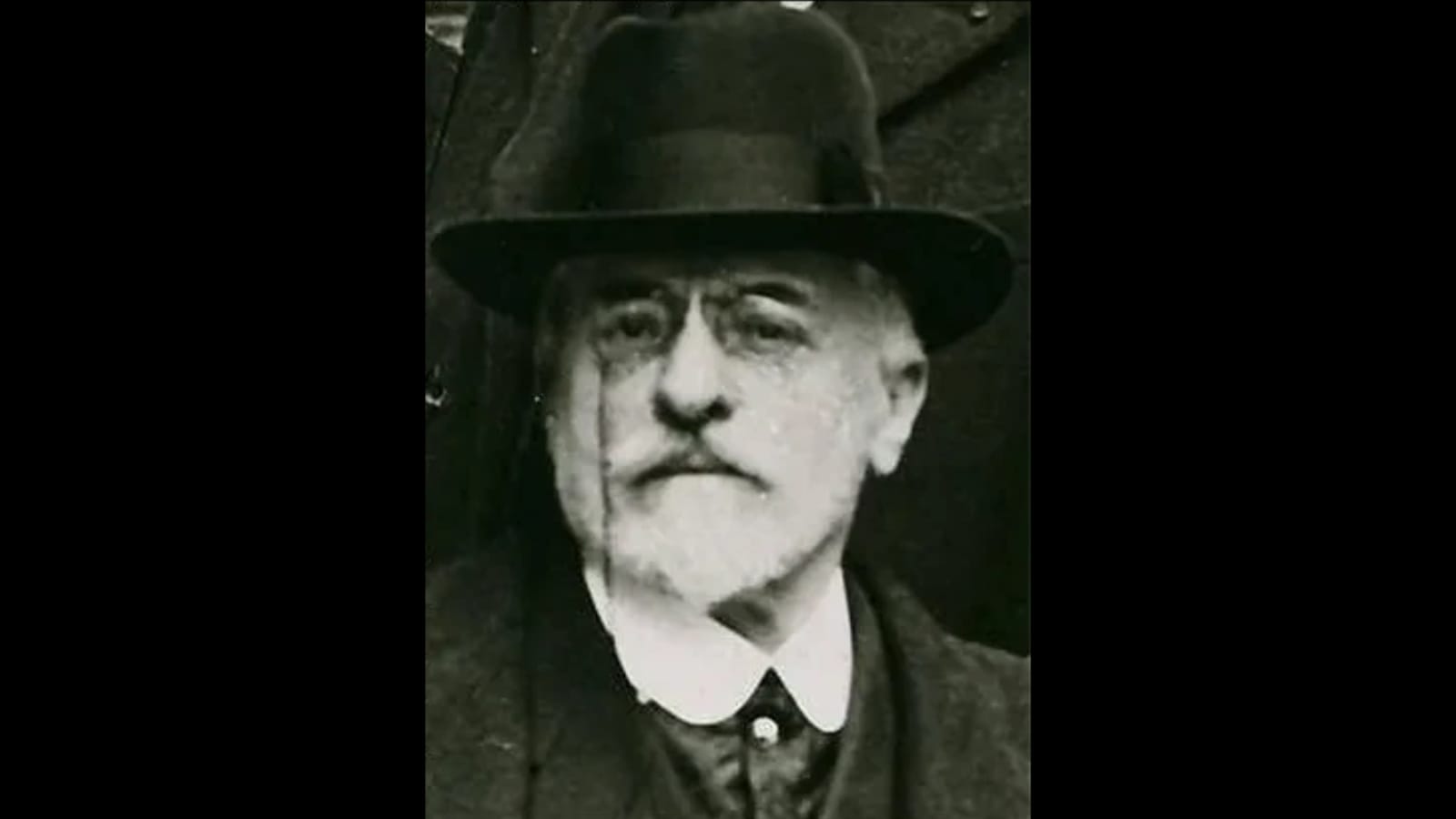
I did manage to find a copy of Bulletin de l’Institut égyptien from 1899 online, scanned. So count that as a lucky break. Problem: it was still in French, which I don’t speak. Another problem: I couldn’t just run the text through Google Translate and use that. I have a strict no-AI policy for my videos, and online translators are shot through with badly-functioning AI tools. I needed a human translator.Ultimately I hired one, though this too proved to be a production. I simply could not believe that I, a YouTube historian, was the first person in the English-speaking world to commission a translation of the journals of a French archaeologist that had been extant for 128 years.
By this time—April 30—the time had come for my trip to San Francisco. The script for KV35 was not yet written; the script for Akhenaten was partially written, unfinished; and I was still waiting for the Theban Mapping Project to get back to me. I won’t go through all the twists and turns of my trip to San Francisco, but there are some details relevant to the KV35 story.
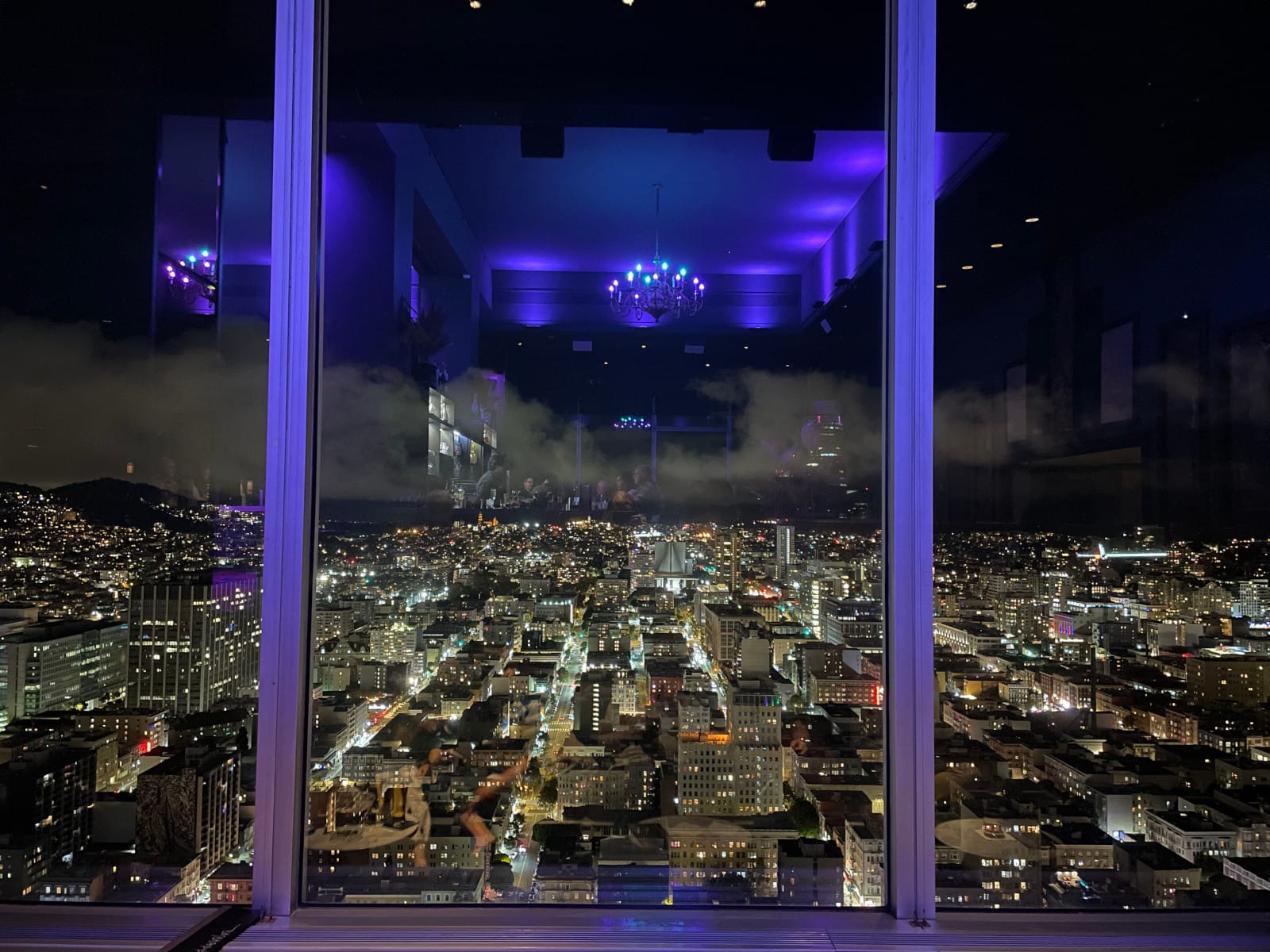
The hotel where my husband and I stayed, as it happened, was the site of the SAA (Society for American Archaeology) convention for 2026. Though we had nothing to do with it, our hotel, near Union Square, was completely packed with hundreds of archaeologists: practitioners, professors, graduate students and such. There was a bar in the lobby of our hotel, and from the moment the SAA convention started, the bar was absolutely mobbed with archaeologists at all times of day and night. The din of their ongoing party was so incredibly loud that at one point I recorded it with my phone. Below is a short excerpt.
Several items of business relating to KV35 converged, by coincidence, during the San Francisco trip. The translator got back to me with the Loret journals translation; the Theban Mapping Project quoted its suggested donation for use of their high-resolution photos of KV35; and a freelance animator, who I engaged to make a 3D-graphics model of the tomb layout, was starting his work and had some technical questions. During the days in San Francisco I was filming Victorian buildings and touring the Haas-Lilienthal house, and in the evenings having dinner and drinks with my husband and his co-workers. In precious spaces in-between, in our hotel room, I was reading and sending emails, documents and photos related to the KV35 project. Mind you, this was before I even wrote the script.
Near our hotel there was a ramen restaurant which, according to its online information, is regarded as the best Japanese restaurant in San Francisco, possibly the whole West Coast. Every night there was a line stretching out the door of at least an hour. We, my husband and I, went there on a Friday night. Naturally, due to its proximity to the hotel, it was mobbed with archaeologists.Because the place was so small the tables inside were picnic style, where you were seated next to the people who happened to be next to you in line. We got talking to one lady, a graduate student from a California university. Her expertise, if I recall correctly, was early Persia. But after the inevitable question “What do you do?” got me explaining my highly unusual job, I began to tell her a bit about the KV35 source follies. She laughed, and then gave a very interesting answer.
“Oh, it’s not surprising that you didn’t find a real translation,” she said. “Most Egyptologists speak English, French or German, sometimes all three. There’s no incentive in hiring graduate students to do translations from any of those languages, because no one would publish them. There’s no profit in it. If an author needs a translation from one of those, they’ll just do it on the fly.”
So that explained it. Romer translated Loret’s 1899 article from Bulletin de l’Institut égyptien—not the same thing as his actual excavation journals—himself. I would never have been able to find an English translation no matter how hard I looked. So yes, I, a YouTube historian, am the first person in the English-speaking world to commission an English translation of those portions of at least one version of Victor Loret’s account of the discovery of KV35. As I eventually remarked, both to John Marcucci and in the final version of the KV35 video, I’ve never chased a source for a video so hard in my career as I did this one.
It all worked out in the end. After returning from San Francisco, I wrote the KV35 video script, and filmed it back-to-back with the Akhenaten video. The Theban Mapping Project came through with some wonderful pictures. The animation of the tomb was top-notch, and I now have an animator in my stable of collaborators. “KV35: Ancient Egypt’s Chamber of Horrors,” a video that started its life as an article on this blog, has proven to be a big success. But it was kind of a wild ride to get here.
If you made it this far, thanks for reading. Hope you enjoy the video!
The Value Proposition
Why should you be reading this blog, or receiving it as a newsletter? This is why.
☕ If you appreciate what I do, buy me a virtual coffee from time-to-time to support my work. I know it seems small, but it truly helps.
📖 You could also buy (preorder) my newest book.
🎓 Like learning? Find out what courses I’m currently offering at my website.
📽 More the visual type? Here is my YouTube channel with tons of free history videos.

Comments ()