Learning about story craft from “Star Wars Episode I: The Phantom Menace.”
What can a bad movie from 27 years ago teach us about how stories and characters work?
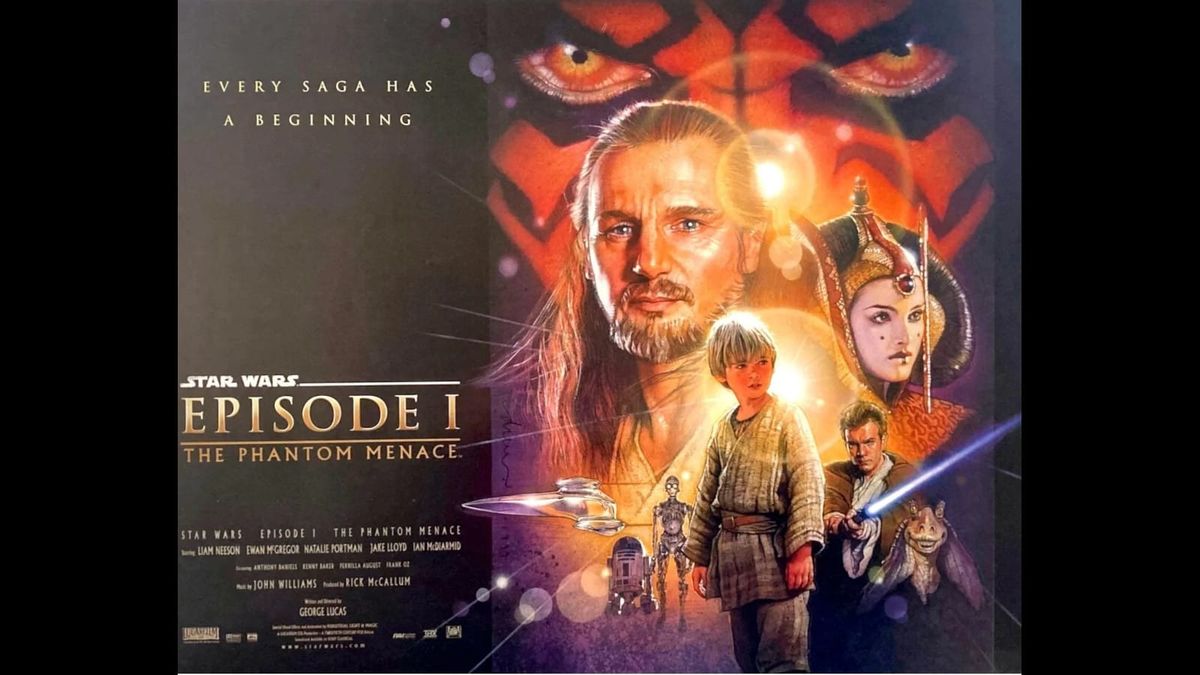
Here is another of my deep dives on questionable movies and TV. I’m always a little nervous when I do one of these articles, but some of them in the past have turned out to be of considerably more interest to Garden readers than I anticipated at first. So, what the hell.
At least half by accident, I’ve been consuming a lot of commentary lately about Star Wars Episode I: The Phantom Menace. I’ve never been particularly interested in this notorious film, which came out a shocking 27 years ago in 1999, though of course I’ve seen it a few times over those years. A podcast I listen to—What Went Wrong, if you must know—did a two-part episode on it back in 2024, which I only just heard, and they name-dropped another show, The Redemption of Jar Jar Binks. I found both tremendously fascinating. While I like Star Wars, I’m far from what you would probably define as a truly dedicated fan. I’ve seen the movies but missed the most recent television shows. I’m one of those GenX fans who grew up with the original films. I have no particular emotional attachment to the “prequel trilogy,” and certainly not to The Phantom Menace. But I have found it extremely interesting from the standpoint of writing, story construction and what does (and does not) resonate with an audience. As my own science fiction project, Faraway Star, is out recently, with its sequel in the works, I’ve been doing a lot of thinking about how to structure a good SF story. I re-watched the film in the past few days.
If you’re older than 27, you probably remember The Phantom Menace as a phenomenon. It came out in May 1999 to probably the most ferocious hoopla and fanfare ever given for a motion picture release up to that point in time. I recall seeing it with some friends on a warm beautiful afternoon. I drove my Jeep Wrangler, then brand-new, to the theater with the top down for the first time. We were underwhelmed when we walked out of the cinema. Most of America seemed to share our opinion. The reviews of the picture were decidedly mixed, but you pretty much had to see it, and everyone did, which accounted for its immense box office take. By an accident of timing, The Phantom Menace happened to come out during one of the finest years in recent film history. In a year crowded with enduring pictures like The Talented Mr. Ripley, Magnolia, The Iron Giant, Eyes Wide Shut, The Matrix, Being John Malkovich and many more, cinema buffs speak of 1999 in almost the same reverent tones as 1939. The Phantom Menace was the top-grossing film of that year, but certainly not the best.