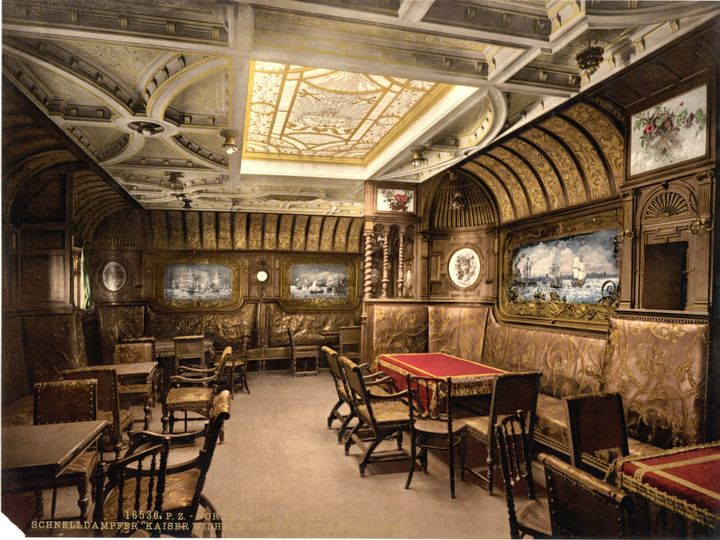
Interiors: Crew quarters aboard the Liberty ship SS Jeremiah O’Brien.
This room shows that, in addition to being a museum piece, this is also a functional ship.
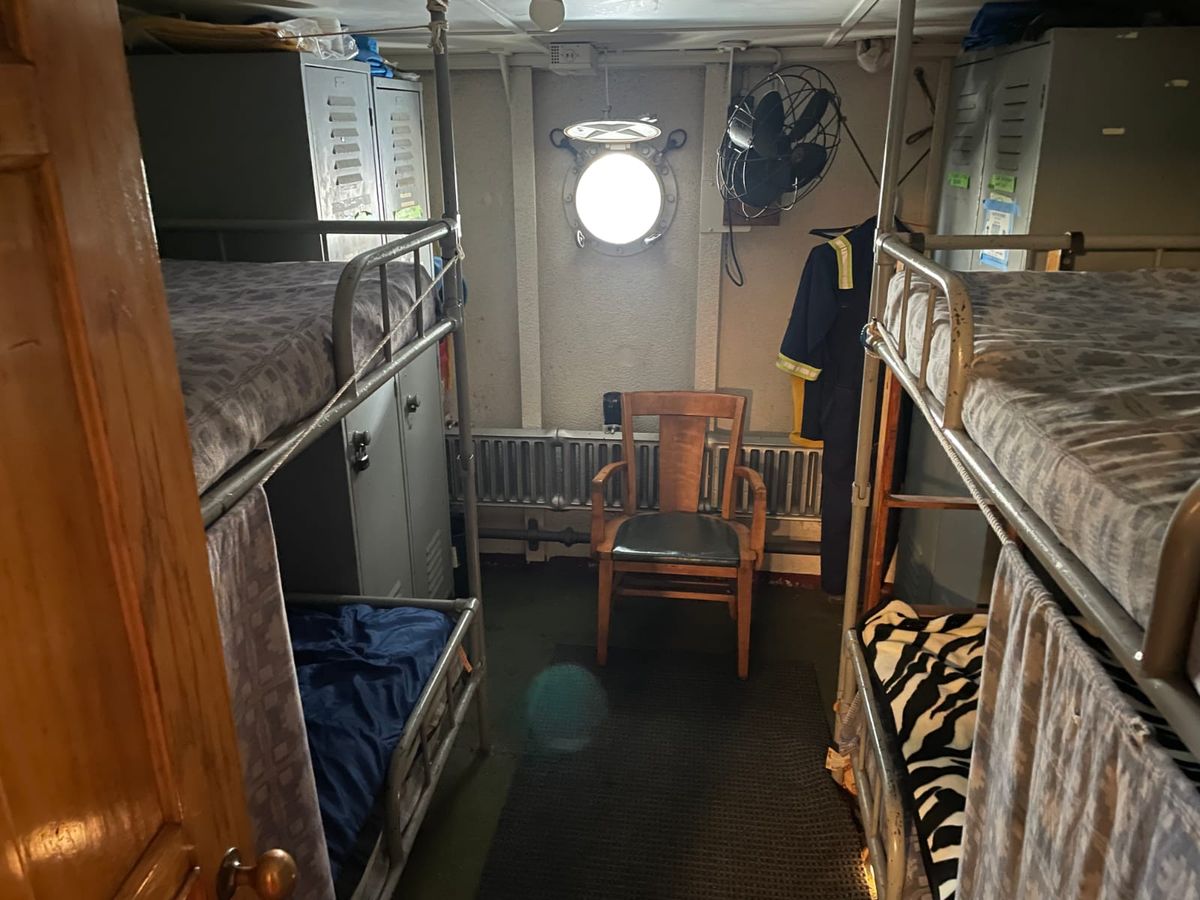
After all the hubbub involving the launch of my book Faraway Star and my recent YouTube projects on ancient Egypt, we’re slowly going to be getting back to normal here on the Garden. To that end, I still got some great historic-themed photos on my recent trip to San Francisco, and here is another one. This is a crew cabin aboard the SS Jeremiah O’Brien, a World War II Liberty ship which is now a floating museum, docked (more or less) permanently at Pier 35 in San Francisco. However, as you can see from this picture, the ship is not just a dead museum. Notice the signs affixed to the locker doors with tape and the decidedly non-1940s bed linens, including a blanket with zebra stripes. There’s also a modern worker’s coveralls on a hanger below the fan. While there are some cabin rooms aboard Jeremiah O’Brien that are restored to their World War II era appearance and kept that way, this isn’t one of them. This is a room used by modern people, and that’s because, while principally known as a museum piece, Jeremiah O’Brien is still a working ship, at least to some extent.
Liberty ships were one of the great and most important wartime projects of the U.S. government in World War II. While exploits on the battlefield—including the oceans—certainly helped, the United States won World War II largely because of its immense industrial capacity. We were able to churn out planes, tanks, ships, trucks and other military and logistical equipment in such utterly vast quantities that the Axis powers simply couldn’t keep up. Most American-built equipment of the World War II era was basic, low-tech and sometimes even shoddy. The basic idea behind Liberty ships, meant to carry cargo to the battlefronts, was that they could be built very quickly and in huge numbers. The engines that powered them were already obsolete by 1943 when the Liberty ship project kicked into high gear. The O’Brien was just one of hundreds, churning off the slipway in June of that year. Her service was generally unremarkable, though the ship was just offshore of the Normandy beaches during the D-Day invasion.