Still no winter: My novel “Life Without Giamotti,” still in print, turned 20 this week!
I still have a soft spot in my heart for my quirky science fiction epic, which has a (very small) cult following.
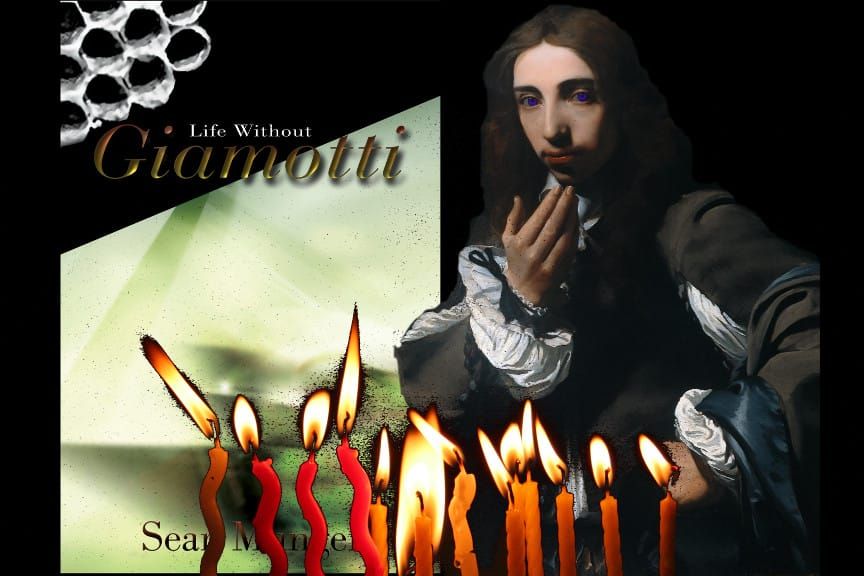
This week saw an odd anniversary for me, one that completely passed me by until I suddenly realized it a few days ago. Twenty years ago this week, on July 26, 2006, my science fiction novel Life Without Giamotti first appeared in print. I self-published it under my own imprint, and while technically it was the second novel I released—Romantic, Memoirs of a Great Liner came out the previous year—it was certainly a momentous occasion at the time. In the past 20 years I’ve gone on to much bigger and better books, such as the four novels that were published by Samhain Horror between 2013 and 2016 (Zombies of Byzantium, Zombie Rebellion, Doppelgänger and The Rats of Midnight), and if you read this blog you undoubtedly know about my most recent work, Faraway Star. Ostensibly there should be no reason to celebrate this little book, which was early in my writing career and much more obscure than some of my later works. But strangely, I do still love this book. And on its 20th anniversary—it’s still available and technically in print, if you can believe it—I thought it was worth a blog post. I even ordered a paperback copy from Amazon just the other day, to see if what I get is still the book as I remember it; there’s been a lot of changes to print-on-demand platforms in the past two decades. It’s here, in both e-book and paperback versions, if you’re curious.
Life Without Giamotti is a very strange and unconventional book, and thus hard to summarize. In 1976, Paul Conlon, a bookish 16-year-old from a wealthy East Coast family, finds himself stifled by his suffocating prep school life and begins writing strange stories on sheets of notebook paper as a means of escape. He invents an anti-hero, Steven Giamotti, a snide Brooklyn-accented punk anarchist who is deliberately the opposite of the milquetoast Preppy friends Paul finds exasperating. Writing the Giamotti stories is just an adolescent phase, but in the year 2000, when Conlon is now a successful science fiction author and a promising historian teaching at Columbia University, his long-forgotten character Giamotti suddenly appears where he has no business being: in one of Conlon’s “serious” historical novels. After leading a revolt of the novel’s characters, it becomes clear that Giamotti, who has somehow developed both intimidating intelligence and the power to move between different planes of existence, is seeking not only to gain entry to the “real” universe in which Conlon (and the rest of us) live, but perhaps to destroy it, thus erasing forever the distinction between what is real and unreal. Giamotti’s quest takes over 60 years and involves numerous twists and turns, and no one who encounters him can be entirely certain of what side they’re on or whether Giamotti will ultimately betray them.