O Captain, My Captain: Remembering Patrick Stewart.
The wisdom and compassion of Picard the character, and Stewart the man, will endure as long as the stars.
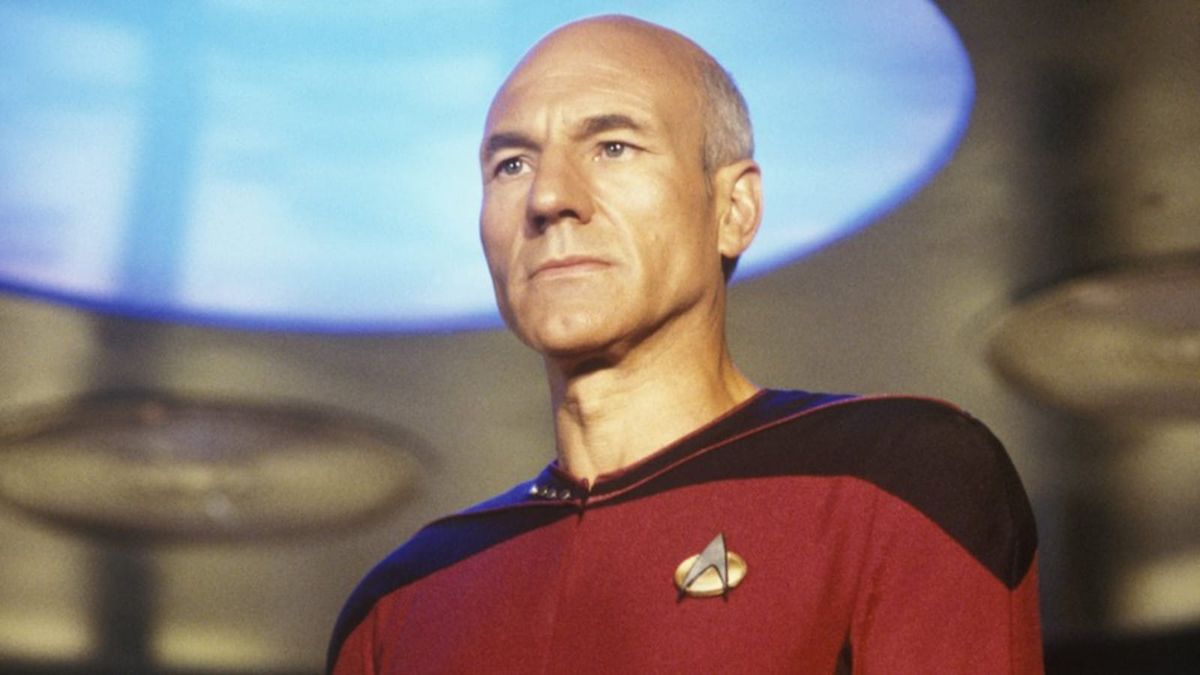
Two days ago, on October 29, 2026, the world learned that Sir Patrick Stewart, beloved British actor of stage and screen, died at age 86. Stewart played many roles over the course of his lengthy career, but of course he’s best known for his participation in the Star Trek and X-Men franchises. The Star Trek community has been understandably somber this weekend, but there have been many heartfelt tributes to the man many of us came of age respecting and looking up to as Captain Jean-Luc Picard. Though a lot has been said, I feel like I should go on record with my own tribute. Stewart was a fine actor, a wonderful man, and a presence that enlightened and ennobled our entire culture—not just as a science fiction icon, but as a Shakespearean thespian, an ally to women and the LGBT community, and as a socialist who clung fiercely to the same egalitarian ideals that I also strongly believe in. I’m devastated at the loss of our “Captain Picard,” but at the same time I’m immensely pleased that he was a part of our society and that he left the world a better place than he found it.
I won’t say that it was an accident of casting that brought Stewart, then age 46, into the Star Trek universe in 1986 when Paramount was trying to launch the new series that would eventually become Star Trek: The Next Generation. Stewart auditioned for and beat out a number of excellent actors for the role, so it was no accident. But that decision of casting was what brought him to the attention of fans of the franchise in a way he probably wouldn’t have been otherwise. I was 15 when Next Generation premiered in the fall of 1987. Like many Gen-X’ers who grew up on the original 1960s series, I was skeptical. “A bald Brit with a French name as captain of the Enterprise? How is that supposed to work?” Next Generation indeed had a rocky start—its first season is famously dreadful—and Stewart himself, even as talented as he was, seemed to struggle to find Picard’s character. But in about 1990, when the exciting season three finale The Best of Both Worlds erased all doubts that Next Generation was a worthy successor to the exploits of Kirk and company, Stewart and the other cast members really made it click. From that point on, Picard was a role model, a father figure and an action hero to many of us.
The great thing about Picard was that Stewart played him as a sort of wayward intellectual, perhaps almost misplaced as a starship captain. In a famous season one episode that saw the promising character Tasha Yar (Denise Crosby) written out of the show, Crosby’s character addresses Picard by describing him as “an explorer with the soul of a poet.” Throughout the show Picard was shown reading old books, dusting off archaeological artifacts, coaching Mr. Data on how to play Shakespeare, and playacting at being a hard-boiled detective in 1940s San Francisco on the Holodeck. Shatner as Captain Kirk in the 1960s couldn’t have pulled off anything close to this range, but Stewart glided through these set-pieces effortlessly, and sold the audience on how this man got to be who he was. There weren’t a lot of heroes on syndicated television in the 1980s and ‘90s who read Shakespeare and cultivated an intellectual, learned and sophisticated side. On other channels, David Hasselhoff was finding excuses to ogle babes on Baywatch and Chuck Norris was blowing people away on Walker: Texas Ranger. Patrick Stewart somehow hovered above the fray.
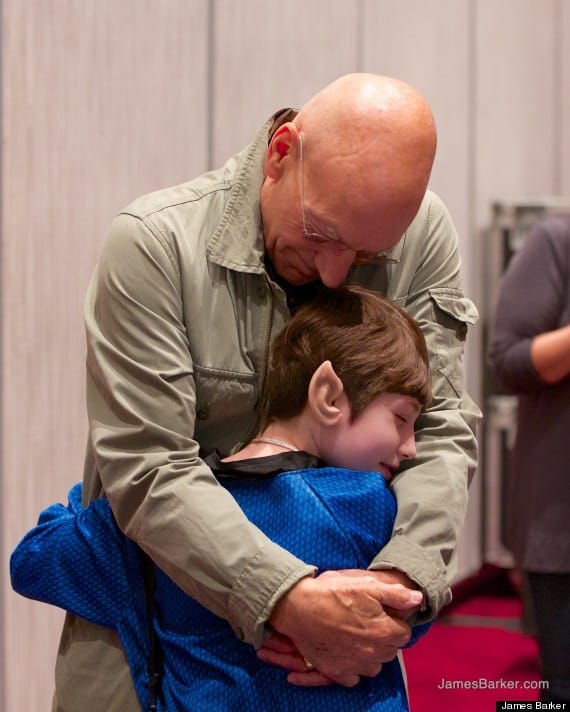
Another important aspect of Stewart’s portrayal—especially resonant in these times—was his sense of masculinity. It’s no exaggeration to say that Captain Picard was a sex symbol in the way Kirk, or even Spock, could not have been two decades earlier. One never doubted Picard was a badass, such as in one of my favorite episodes, Starship Mine from 1993, where he essentially plays the Steven Seagal role in a Next Generation redress of Under Siege. He also wooed women, from space rogue Vash to his own alluring Dr. Beverly Crusher, and always treated them with respect. In real life Stewart was a feminist and a staunch ally of the LGBTQ community, forming an enduring friendship with gay actor Ian McKellen after the latter came out publicly. In a culture awash in fulsome misogynistic trolls like Andrew Tate or our despicable insane President who boasted on tape that “you gotta grab ‘em [women] by the p*ssy,” Patrick Stewart, with his brand of unthreatening and compassionate masculinity, is something we need a lot more of.
Stewart was fun to watch and endlessly diverting even in his non-Star Trek roles. I confess I’m not a fan of comic book franchise pictures so I can’t speak to his work in X-Men, though I hear it was quite good. Even though it’s only a bit part one of my favorite performances of his was in John Boorman’s 1981 fantasy epic Excalibur, in which Stewart plays a would-be king who despite beseeching, “God, grant me the power!” is unable to remove the titular sword from the stone. He’s also great in David Lynch’s surreal 1984 interpretation of Dune, a film I like very much despite being generally poorly regarded, but even people who hate that picture usually have a good word for Stewart as Gurney Halleck. In a film full of ludicrous over-the-top imagery, Stewart has perhaps the most ridiculous scene of anyone, shouting “Long live Duke Leto!” at the end of a battle scene while clutching a tiny pug puppy. When we were doing our now-defunct podcast series Green Screen, on which we profiled the 1984 Dune, my husband and I frequently referenced this moment and I often played the audio clip. Ridiculous or not, Stewart sold it like no one else could.
One of the clips that’s been making the rounds on social media since his death is one I wasn’t aware of until the other day. Apparently Stewart once recorded a bit for Sesame Street, in full Elizabethan regalia, soliloquizing to a styrofoam letter B the existential question, “A B, or not a B? That is the question!” Yes, the gag is a little highbrow for four-year-olds just learning their letters, but who else but Patrick Stewart could have pulled that off, drawing upon his deep love for and fluency in the language of Shakespeare? And who else could have made it such an utter delight to watch? This was the essence of Patrick Stewart: unpretentious and folksy despite his lofty talents, compassionate and amiable despite his commanding presence, a man who raked in millions for being in X-Men but who was still willing to drop everything and go do a children’s show because he thought it’d be fun, and probably because someone at Sesame Street had the gumption to ask him. We need more like him.
Patrick Stewart on Sesame Street. I mean, who else in the world could do this?
But in the end, because of my background, my interests and my long history as a Star Trek fan, I always return to Picard. Stewart did not write most of the lines that resonate with those of us who loved him, but to us, he was so convincing that they might as well have been his own utterances. In an episode called The First Duty he dresses down wayward cadet Wesley Crusher by telling him, “The first duty of every Starfleet officer is to the truth—whether it’s scientific truth, historical truth, or moral truth.” In an earlier episode, also much quoted since Stewart’s death, he told Data, “It’s possible to make no mistakes and still lose.” Picard’s wisdom and understanding, his loyalty to his friends and co-workers, and his strong defense of moral and ethical principles made you believe that, even in a chaotic and sometimes hostile universe, what Lincoln called “the better angels of our nature” can still come out on top. We needed that message in the years Star Trek: The Next Generation was on the air, and we need it even more now. Stewart is no longer there to deliver it, but his work will live on forever, reminding us of the spirit of exploration and compassion that made Captain Picard the man he was and the figure of admiration he should be.
Of all the many Picard/Stewart quotes that have churned about in my mind since the news of the actor’s death, my favorite comes from the first Next Generation film, Star Trek: Generations, made in 1994. To understand it you must first appreciate an exchange earlier in the film where villain Soran, played by Malcolm McDowell—incidentally, a fellow Shakespearean actor who knew and worked closely with Stewart as far back as 1965—says to Picard, “Time is the fire in which we burn...it’s like a predator, stalking you. Oh, you can outrun it with doctors, medicines, new technologies. But in the end time will hunt you down and make the kill.” I admit, now in my 50s, a long way from the gawky 15-year-old kid I was when Next Generation premiered, sometimes I feel like this.
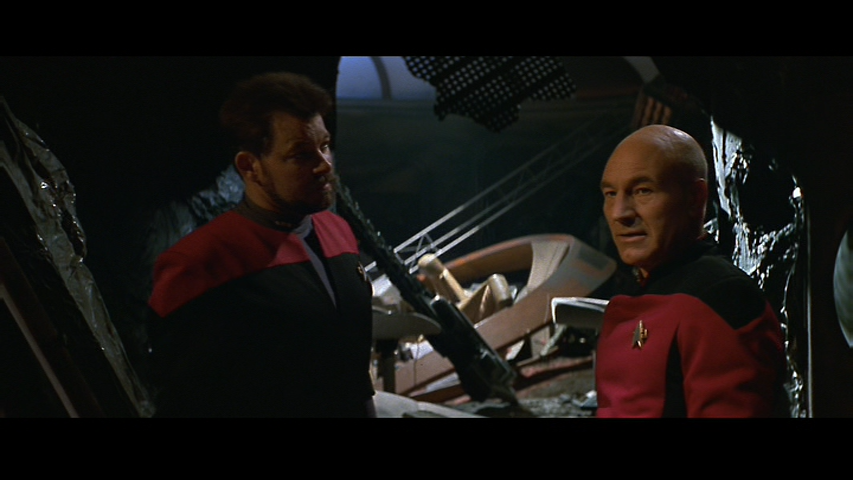
But in the film’s final scene, after Picard has triumphed over Soran—who was only ever interested in his own selfish motives—he remarks to Commander Riker (Jonathan Frakes):
“Someone once told me that time was a predator that stalked us all our lives, but I rather believe that time is a companion who goes with us on the journey, and reminds us to cherish every moment—because they’ll never come again. What we leave behind is not as important as how we lived. After all, Number One, we're only mortal.”
For some strange reason the memory of this quote came back to me recently, a few months ago. When my husband and I were in San Francisco, shooting a video—you can read my account of that strange weekend, here—one evening when we were at the bar, amidst the very loud clamor of the archaeologists with whom we shared our hotel, I thought of that. “Time is a companion who goes with us on the journey...after all, we’re only mortal.” It struck me as a truly beautiful thought.
He was right in one sense. The real man, Patrick Stewart—the actor, father, friend, Shakespeare scholar, advocate, proud and fierce socialist—is dead. But Captain Jean-Luc Picard, who was embodied with so many of his wonderful qualities because Stewart brought them into him, will never die. He’ll be out there forever, exploring the stars and boldly going where all of us should be inspired to follow him. I’m glad my life was touched by both of these men, one real, one fictional, but all inspirational. Thank you, Captain, for everything. One to beam up.
The Value Proposition
Why should you be reading this blog, or receiving it as a newsletter? This is why.
☕ If you appreciate what I do, buy me a virtual coffee from time-to-time to support my work. I know it seems small, but it truly helps.
📖 You could also buy my newest book.
🎓 Like learning? Find out what courses I’m currently offering at my website.
📽 More the visual type? Here is my YouTube channel with tons of free history videos.


Comments ()