The New Age hoax that won’t die: Carlos Castañeda’s long deadly legacy.
There's still much to say about the toxic cult leader whose fraudulent writings still maintain a large following today.
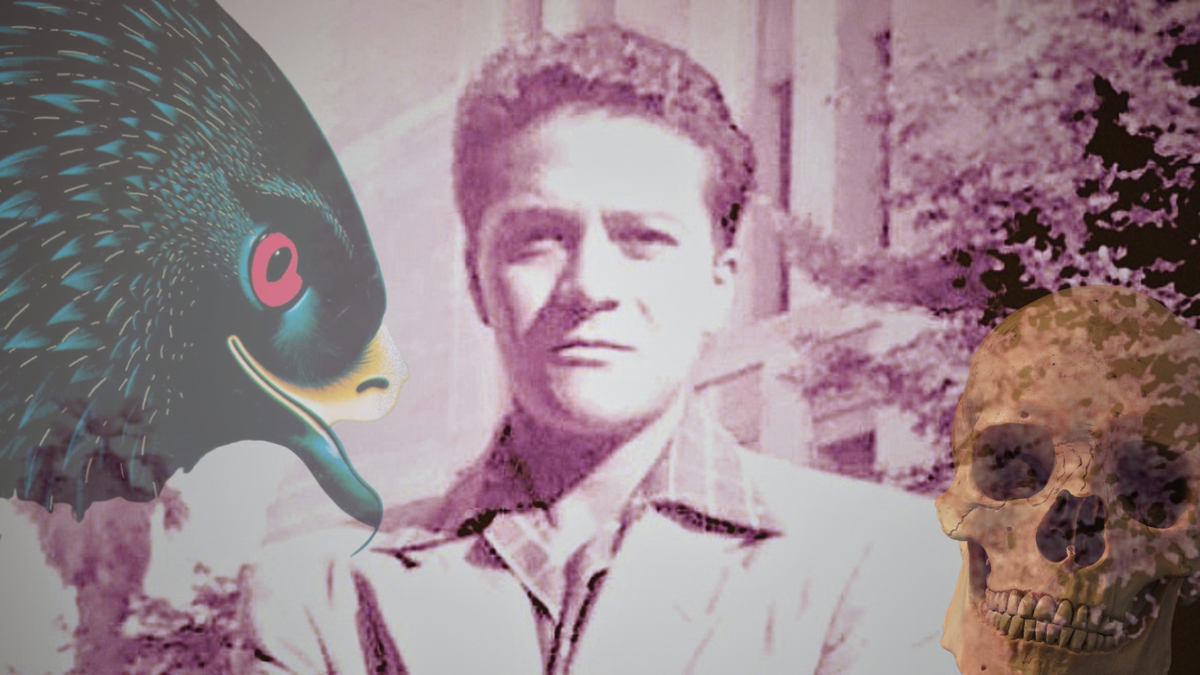
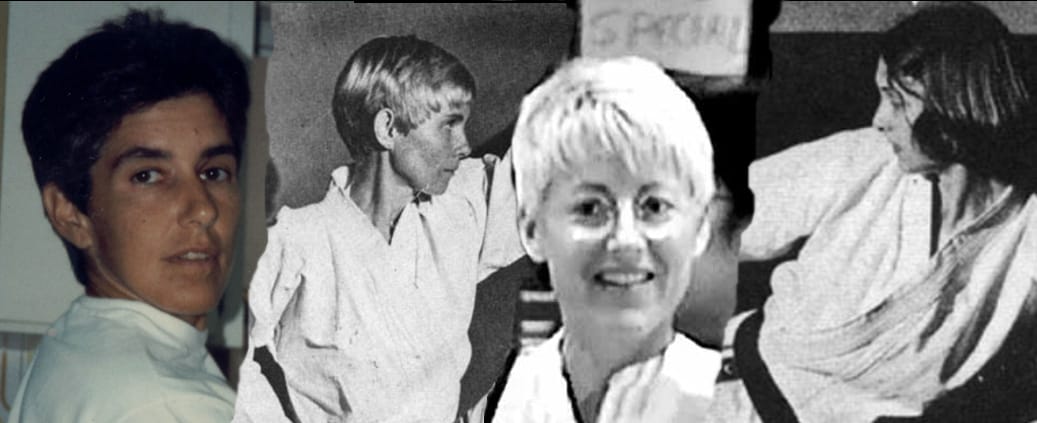
Eight years ago, in July 2018, I published a video to my YouTube channel titled “What Happened to the ‘Witches’ of Carlos Castaneda?” (Note, his name is, I think, properly spelled with a tilde). It’s about five women—Florinda Donner-Grau, Taisha Abelar, Amalia Marquez, Kylie Lundahl, and Patricia Lee Partin—who all vanished from the Los Angeles area in 1998 after the death of fraudulent New Age spiritualist author, guru and cult leader Carlos Castañeda, with whom all the women were deeply involved in the years before he perished of cancer. In 2003, skeletal remains eventually identified as Partin’s were discovered out in the California desert, but none of the others have been found. I was intrigued by the mystery of the missing women, who called themselves “witches” and believed they were practitioners of some sort of New Age sorcery. While it’s presumed the women went out to the desert to commit suicide, possibly on Castañeda’s suggestion or orders, exactly what happened to them is unknown to this day. The video is embedded below. For reasons I’ll describe in a moment, I thought I would do a blog about this subject, even though the video is 8 years old. There is a bit of an update; in 2024 an investigative reporter did a fascinating deep dive on the story of the missing women, and obviously I did not have the benefit of that story when I made my video in 2018.
This video was one of the early successes on my channel. I made it long before my channel had any significant audience, and you can see how primitive it is compared to the pieces I’ve been doing lately. Curiously, despite its age, this month (September 2026) the video has been boosted by the YouTube algorithm and for the past week or so has been the top-viewed video on my channel. So if you’re wondering why I chose to do this article now, the better part of a decade since it’s release, that’s why.
After 8 years of this video being online it’s attracted a lot of comments in that time. The sentiments expressed in the comments, and in other messages and emails I occasionally get on the subject of this video, have tended to focus on a number of issues. I find it somewhat disconcerting that a significant number of comments do not address the mystery of the missing Tensegrity women at all, but rather Carlos Castañeda himself, his books, or the commenters’ own history reading the books. This suggests to me that a large number of viewers have missed the point of the video, which is primarily about the disappearances. Many people can’t seem to get out of the starting gate, so to speak, which is the fact that Castañeda was a fraud and that his books—though taken by many to express some sort of spiritual truths—are pure fiction. It has been nearly 60 years since Castañeda came to cultural prominence in 1968, and even after all that time he still seems to have a lot of acolytes, followers and defenders. I find that both disturbing and incomprehensible, but perhaps I shouldn’t, given the popularity of cult leaders and the doggedness of their supporters.
Nevertheless, if you’re interested in a sort-of “update” on this video, 8 years after its initial release, I offer these points.
Castañeda was undoubtedly a fraud, and “Don Juan Matus” a total fiction. That hasn’t changed.
This is by far the number one issue anyone wants to talk about whenever Carlos Castañeda is brought up. There is simply no question that the experiences he wrote about in his books, beginning with The Teachings of Don Juan: A Yaqui Way of Knowledge which was published in 1968, were not true and totally made up. Indeed, the veracity of his central claims—that he met a Yaqui “shaman” called Don Juan Matus and went around doing peyote and going on various spiritual journeys with him—was questioned pretty much immediately upon the publication of Don Juan. Whatever credibility Castañeda had was utterly demolished by 1976, when Richard de Mille published a series of articles taking apart Castañeda’s claims one by one. Witnesses proved that, at the times Castañeda claimed he was running around out in the desert with Don Juan Matus, he was actually in the UCLA library. It’s just not capable of any reasonable dispute: Castañeda’s books were fiction, not fact. His was one of the most audacious literary hoaxes of the 20th century.
Indeed, his exposure as a charlatan and a fraud was at least part of the reason why Castañeda retreated from the public eye after 1973. By that time he’d been awarded advanced degrees in anthropology by UCLA solely on the basis of Don Juan—a shocking lapse of judgment by an institution that should’ve known better—but UCLA refused to withdraw the degrees to try to tamp down the scandal. The books were marketed as factual, and with the imprimatur of UCLA claiming they were legitimate academic work, the publishers had a free hand to pretend they were real. Castañeda’s grotesque forgeries sold millions of copies and many people, searching in the counterculture era for some sort of larger meaning, accepted them as true. But Castañeda didn’t even publicly defend his writings, at least not very much. Instead he retreated to count his millions and to amass the group of followers, mostly women, who would stick with him the rest of his life. Five of those cultists may have followed him into death in 1998. If Castañeda’s writings were true and Don Juan was a real person, why would he have dropped out of public sight? Wouldn’t he have been able to prove the authenticity of his writings, and thus vindicate himself amidst public criticism? He never did that.
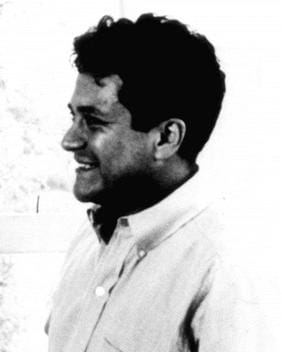
William Kelly, chair of the anthropology department at Yale University, had this to say of Castañeda:
“I doubt you'll find an anthropologist of my generation who regards Castaneda as anything but a clever con man. It was a hoax, and surely Don Juan never existed as anything like the figure of his books. Perhaps to many it is an amusing footnote to the gullibility of naive scholars, although to me it remains a disturbing and unforgivable breach of ethics.”
Carlos Castañeda was a fraud. There’s simply no question about it, however much the fans of his books—and there are millions of them—fervently wish the opposite was true. Geoffrey Gray, author of the lengthy 2024 investigative article I’ll discuss in a moment, said of Castañeda, “He should not be a literary icon or New Age hero to anyone. He was a creep.”
Castañeda was a cultural appropriator.
This is an angle I didn’t hit very hard in my 2018 video, but should have. He claimed that the whole phenomena he went out into the desert to describe, and then came back to cash in with a doctorate at UCLA, was based on the spiritual traditions and cultural milieu of the Yaqui tribe. That was false, and proven false fairly quickly. The Yaqui apparently do not use peyote in the way Castañeda claimed they did, or much at all in fact. He basically used the Yaqui as a costume to cloak warmed-over platitudes stolen from philosopher Ludwig Wittgenstein and Christian apologist C.S. Lewis, two definitely non-Native American authors.
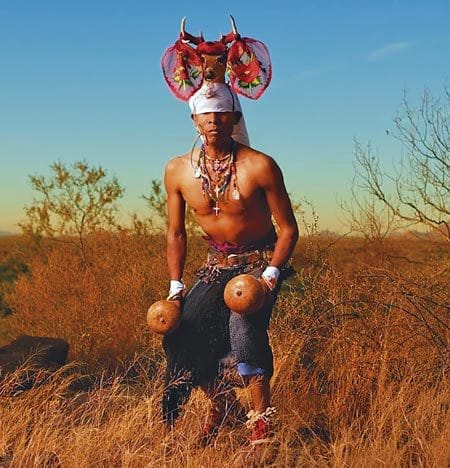
In the counterculture era of the 1960s and early ‘70s, though, this was an asset, not a liability. Mainstream young people dissatisfied with dominant American culture—the kind of people who were getting into drugs, protesting Vietnam and searching for spiritual meaning—naturally gravitated toward people and concepts they believed, accurately or not, had something to do with Native Americans. I raised this point recently, in fact, in my video about Star Trek and the Vietnam War, in which I observed that many in the hippie subculture appropriated Native American clothes, designs or perceived cultural values. Seen in this light, Castañeda’s cultural appropriation was savvy marketing. And it worked. It was a pretty cynical ploy, but Castañeda definitely exploited the historical moment in which he found himself.
Castañeda was not a CIA “plant,” or an agent of any kind.
I’ve occasionally gotten comments to the effect that Carlos Castañeda was secretly in the employ of the CIA, a “spook,” evidently trying to get kids on drugs as a way to do something something, MKULTRA, something something Jews something. These accusations are ludicrous. He was a con man out to enrich himself, not to fulfill a political agenda. There’s not a shred of evidence that Castañeda had anything to do with the CIA, and it’s hard to conceive of what an intelligence agency would have stood to gain by having any kind of relationship with him. (It’s almost as ludicrous as claiming that I am a CIA agent, an accusation I receive frequently enough that I did a blog post on that, too).
I’ve noticed, however, that in the past 7 or 8 years, particularly since the publication of a 2019 book about the Charles Manson case by Tom O’Neill called Chaos—which does not have a reputation as good history—that conspiracy theorists have begun floating the notion that the whole 1960s-70s counterculture was somehow an artificial construct by the CIA or other shadowy conspirators, for what reason is unclear. So Castañeda, as a major counterculture figure of the period, naturally gets swept up in this nonsense. It is nonsense. The counterculture that emerged in the 1960s, which itself was just a continuation of the Beat and other movements from the previous decade, needed no help from the CIA. To maintain otherwise is to rob a number of highly important historical figures of their agency. It’s a pretty idiotic idea, but I do hear about it from time to time.
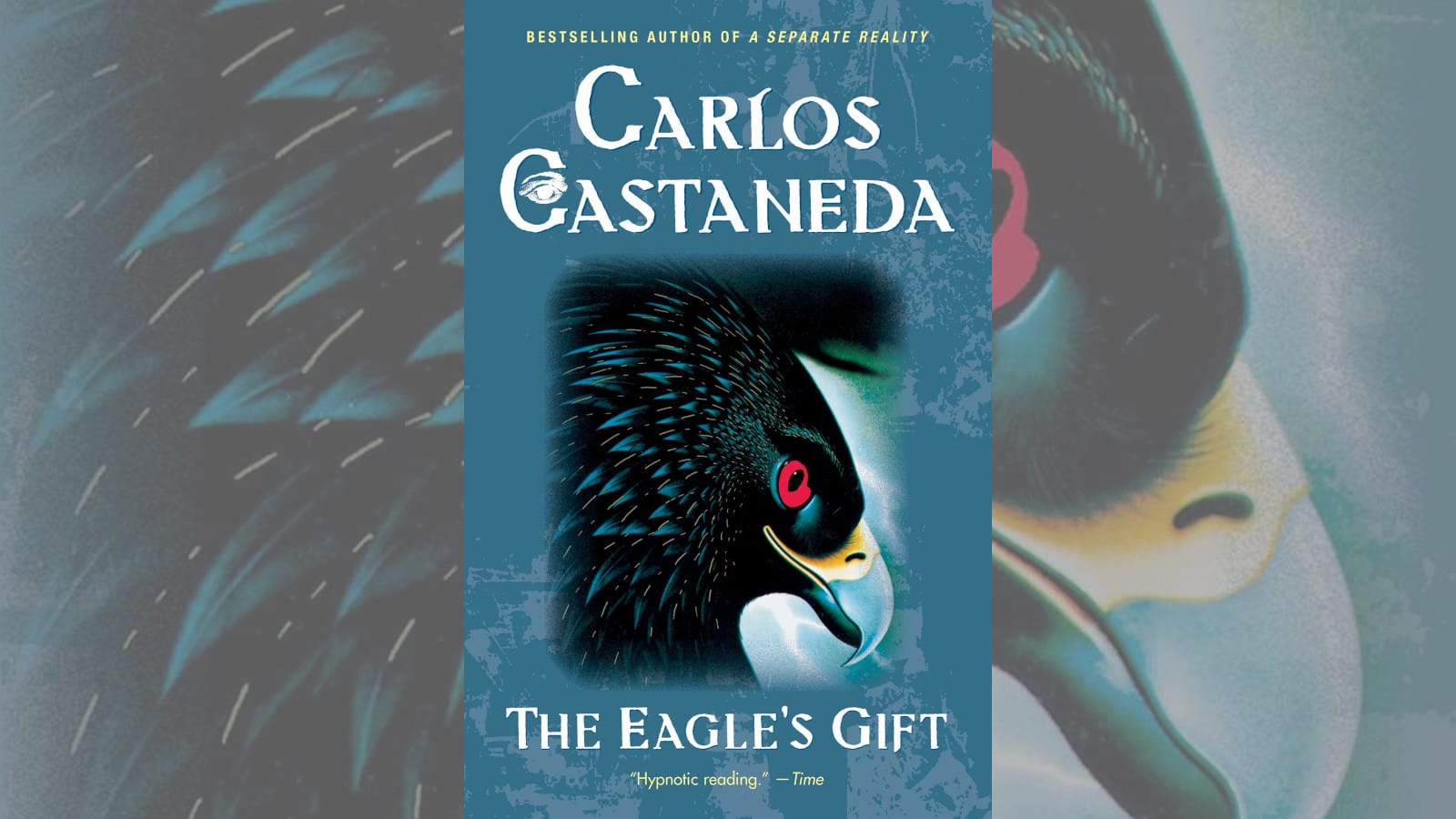
The way Castañeda’s books made you feel in the ‘70s doesn’t justify his crimes.
Some Castañeda fans—the more rational ones who at least acknowledge that his works are fiction—often take the tack, “Well, yes, they were fake, but he was a wonderful writer and there’s a lot of value in his books,” etc., etc. This is the sort of vaguely sour-grapes type defense that Oprah might have used after getting burned by fake drug addiction or Holocaust memoirs. I don’t buy it. Even as a fiction writer, Castañeda sucked. If he had to rely on cultural appropriation to get his point across, did the message he supposedly had to transmit to the world really have that much value? In any event, the feel-good New Age vibes that many people got from his books are awkward cover for the truth of who he was and what he did.
I point you to what is still the best firsthand account of Carlos Castañeda and his cult, which is Amy Wallace’s memoir Sorcerer’s Apprentice: My Life With Carlos Castañeda. Though she was an acolyte of the fraudulent guru, Wallace managed to pull out of it and did not go as all-in as the five “witches” who disappeared evidently did. But she paints a grim picture of emotional manipulation, sexual domination that blurs the lines of consent, and the obvious toxic narcissism of Castañeda, whom even his close friends and family members describe as a habitual and fairly brazen liar. Since 2018 when I made my video, we have seen many examples of cults run by abusive leaders who seek to control the lives of their followers, particularly women. The cult NXIVM and its utterly grotesque leader, Keith Raineire, offers what I think is the closest parallel to Castañeda’s cult. Carlos didn’t traffic human beings or get women to brand their genitals with his initials, but those are differences in degree, not really in nature. I think the evidence supports the conclusion that Carlos Castañeda was a profoundly dangerous man to those around him. Patricia Partin’s bones are a clear—and ominously mute—testament to that.
Update: Did some of the missing women secretly survive?
As I said, the most interesting thing about the story of Castañeda’s cult is the one that many people who’ve commented on my video seem to have missed, and that’s the matter of the missing cultists. It turns out that, since I made my video, some very interesting work has been done on that aspect of the case.
My 2018 video was not my first pass at the subject. It was, in fact, a video version of one of the most popular articles on my old blog—now long defunct—which was the original progenitor of the Garden of Memory. At the time I wrote that original article, in 2013, I approached the story of the Tensegrity “witches” similar to most other missing persons cases. I think I may have been wrong to do that, because the Castañeda case is indeed truly extraordinary. You can’t bring to it the same set of assumptions that you can to most other cases of missing persons. The circumstances surrounding the cult leader’s death were highly unusual, as were the women themselves.
In 2024, reporter Geoffrey Gray did a lengthy story on the women’s disappearances for Alta, a California-themed magazine. You can see an archived version of the story here, and I highly recommend reading it. Gray tracked down the survivors of the cult, including one of whom I mentioned in my video, “Carol Tiggs,” a/k/a Kathleen Pohlman. He also interviewed Castañeda’s stepson, who after 1998 sued his estate for a piece of his stepfather’s fortune—which itself was curiously low-balled at only $1 million—on the grounds that the cult leader’s will had been mysteriously changed only a few days before his death. Gray also investigated the disposition of Castañeda’s estate. It’s an extremely murky picture, but suffice it to say there is a significant possibility that at least some of the “witches” might have been alive long after 1998. They, as well as others in Castañeda’s close circle, were the principal beneficiaries of his estate, via that changed will.
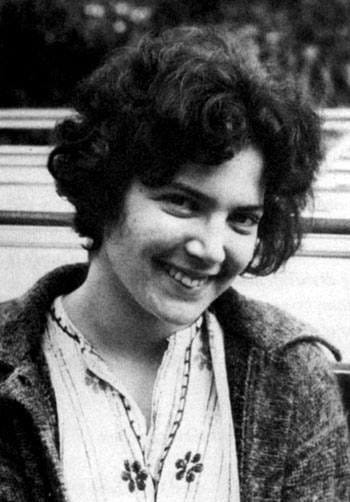
This raises an interesting possibility that turns the whole subject on its head. It might not be what I assumed it was when I made my video in 2018, which was that a nefarious cult leader essentially brainwashed his groupies and got them to go out into the desert to commit suicide on the expectation that their souls would “ascend,” or turn into eagles or something. (Yes, I’ve had comments on my video that assert, literally, that that’s what happened). It could in fact be the reverse: that the witches instead conspired among themselves to manipulate their dying benefactor into leaving them his money. Gray confirms that the will was indeed changed only four days before Castañeda’s death, when he was physically failing and probably mentally incapacitated. And he does uncover some evidence that payments were being made to persons and entities unknown significantly after the disappearances of the women. So it seems possible that they could have survived and gone undercover, to fritter away the cult leader’s ill-gotten millions.
The one fact cutting against this theory, however, is that we know for certain that Patricia Partin, called the “Blue Scout” by Castañeda, is dead. It’s undoubtedly her remains that were found in 2003. Her car was found shortly after what must have been her death. Clearly she got out into the desert somehow, most likely under her own power. But then again, Partin seems to have been an outlier among the women. She was often described as being in a pathetic child-like state, her mind completely crumbled from Castañeda’s influence. Maybe the other “witches” bumped her off, or encouraged her to wander out in the desert as a means of getting rid of her so she would not siphon off his estate. This is, however, only speculation.
Today in 2026 I believe it is quite possible that at least some of the women survived. When I made the video I thought that possibility existed, but was pretty remote. Obviously, after the investigative work Geoffrey Gray did, if I made the video today I would do it quite differently than I did 8 years ago. But I still think it holds up well enough to leave the video up, and aside from the substantive story it tells it has some value as an artifact of the early days of my channel.
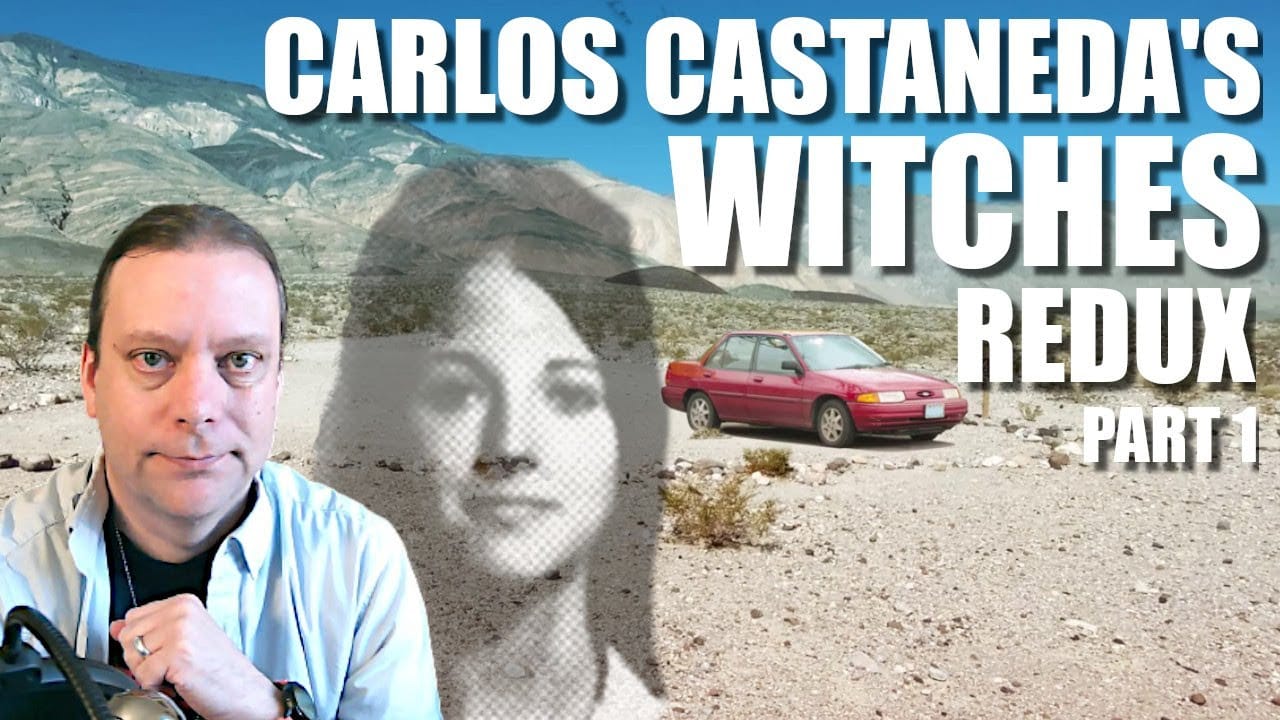
I never intended to become any sort of authority on the work and life of Carlos Castañeda or his followers. I don’t believe I am; others, such as Geoffrey Gray, are much more knowledgeable than I am. This was just an interesting story that I covered on my blog, and eventually on my YouTube channel. At the time of this writing it has over 234,000 views. When I made it back then, eight summers ago, I had no inkling of what it would become. (Incidentally I also did two other Castañeda-themed videos, crossovers with fellow YouTuber Joe “Desert Trippin’” Bui in March 2021, here and here). It’s now firmly a part of the lore of my channel, I guess. It’s a bizarre and thought-provoking story about how charismatic leaders can manipulate people to foul ends. Unfortunately there are a lot of examples through history of that kind of story, and there will undoubtedly be more in the future. Carlos Castañeda is but one charlatan among many.
The Value Proposition
Why should you be reading this blog, or receiving it as a newsletter? This is why.
☕ If you appreciate what I do, buy me a virtual coffee from time-to-time to support my work. I know it seems small, but it truly helps.
📖 You could also buy my newest book.
🎓 Like learning? Find out what courses I’m currently offering at my website.
📽 More the visual type? Here is my YouTube channel with tons of free history videos.


Comments ()