My year of AI resistance. There’s hope!
AI is a fundamentally fascist technology expressly intended for the destruction, demoralization, and denigration of humans.

A little more than a year ago, on May 3, 2025, I published this article, which remains the longest single article on the Garden blog to date. The writing of the article was memorable for me. It came at the end of a process of evaluation, research and soul-searching, and after I decided firmly that generative artificial intelligence is not only useless to me and harmful to the world, but also a huge scam. While I had started to sour on AI before I wrote it, it was in May 2025, in my video on Mexico in World War II, that I first put a disclaimer at the front of my videos: “No AI was used in the making of this video.” It’s safe to say that, in the year since, my opposition to and disdain for AI has only hardened and strengthened. I am absolutely, and without any doubt, an AI hater.
The purpose of this article is not to re-litigate all the issues I raised a year ago in that previous one. It is mainly to remark that I’m surprised and heartened to notice just how deeply entrenched AI resistance has become in the general American population, especially in the past year. In the opening of my article of a year ago, I stated that I thought my stance on AI “is probably going to make me deeply unpopular.” That did not happen. In May 2025 it was by no means clear where the broader culture was going on the question of AI, but a year later it seems pretty evident that most people do hate it. In the past two weeks, at least three video clips have gone viral of pro-AI graduation keynote speakers—including a former Google executive—getting roundly booed and jeered by audiences for speaking positively of AI and claiming, entirely without evidence or justification, that it’s somehow the inevitable future for which college graduates have been (or should have been) preparing. Communities all over America are rejecting the construction of data centers. The home of OpenAI executive and noted pro-AI liar Sam Altman was recently shot at by a deranged person. I don’t condone that obviously, but there should be no doubt where most people’s feelings about this fulsome technology are, and it’s only become more clear in recent months and weeks.
Software companies have, especially in the last year, become pretty dogmatic about pushing AI and its related products. Google, Meta, Microsoft and countless other companies have begun incorporating chatbots or other AI processes into their basic products, like the Google search engine or the Microsoft office suite, whether users want them or not—and they usually don’t. There have also been aggressive attempts to sell AI products to various sectors including, most troubling, educational institutions. Salespeople and middle managers are pushing “EdTech” on universities, school districts and individual teachers. The pushback has been pretty ferocious. Look, for example, at this article from an organization called PACES which is trying to get AI tools out of the New York City school districts. AI is actively harmful to students and learning, degrading their cognitive understanding, making them shallower and less intuitive thinkers, and junking up their lives with yet more useless screen time. But the promoters of what’s obviously a commercial money-driven scheme to force AI brutally down the throats of educators and students continue their assaults apace.
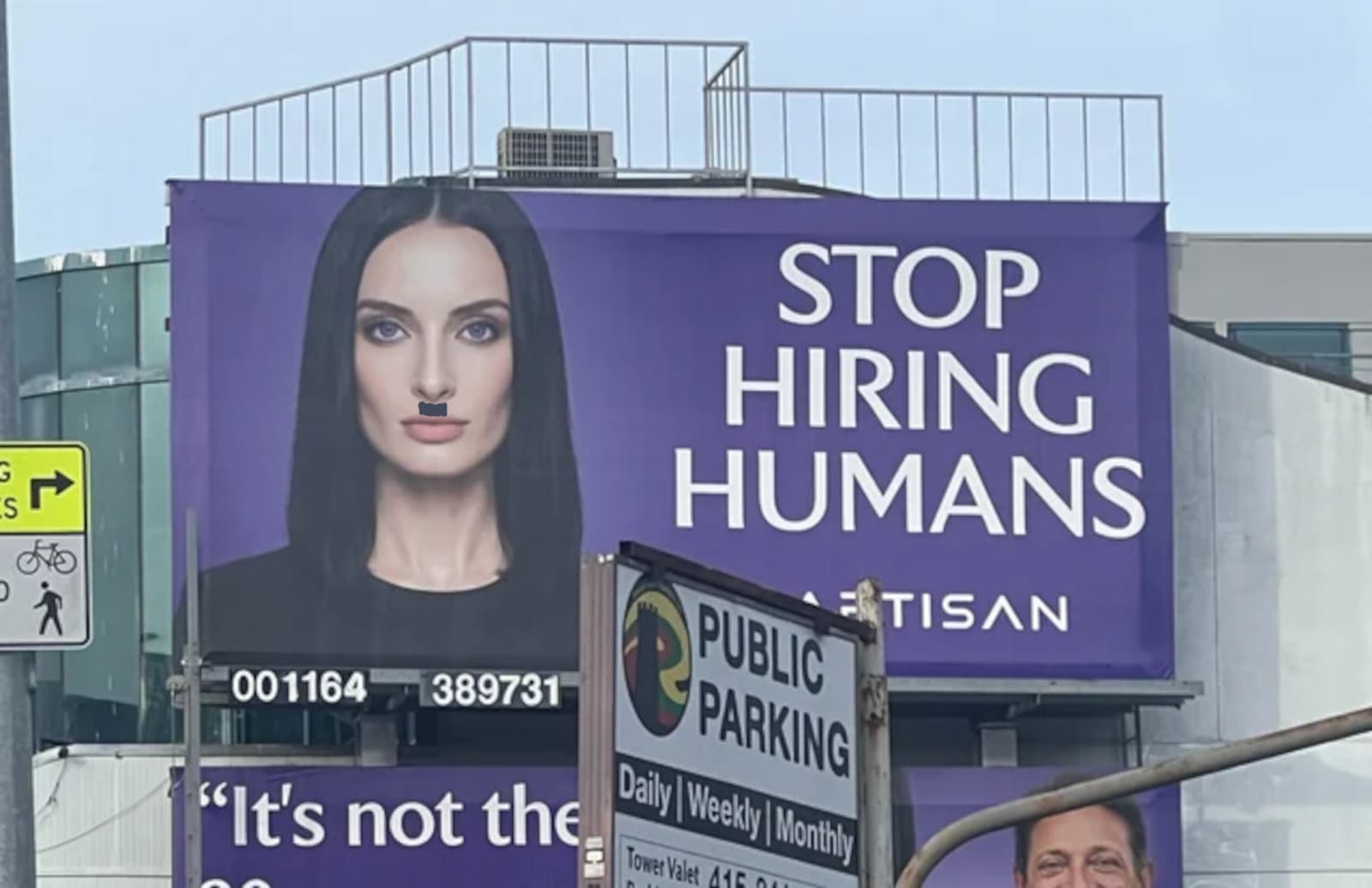
But most people, not just teachers, are resisting. If you’ve been paying attention to my recent articles, you probably know that I was recently in San Francisco shooting a video. Beginning in April, San Francisco was the test market for an advertising blitz from a company called Artisan, evidently peddling AI “assistants” designed to replace HR managers. Artisan’s campaign featured the charming slogan “Stop Hiring Humans,” which they plastered on bus shelters and billboards together with an obviously AI-generated woman’s face, and even had a plane towing a large flag with those words circling the city. The backlash was significant enough that Artisan’s CEO felt compelled to write a vaguely apologetic and completely disingenuous blog post in which he claimed that he supposedly likes humans and that there was an important “nuance” to his stance on AI that the ad campaign that he signed off on didn’t communicate, somehow despite the fact that the ad campaign was exactly what he wanted to communicate. It wasn’t too convincing. When I was in San Francisco, nearly every ad I saw with the “Stop Hiring Humans” slogan had been vandalized. On many posters, people had drawn Hitler mustaches on the AI-generated woman’s face. There’s clearly a public recognition that AI is the technology of fascism, oppression, and hatred of humanity and human qualities.
This is why the fallback position to which many AI promoters are retreating—the idea that AI should “enhance” or “supplement” human labor, but never replace it (yeah right)—simply isn’t going to work. The chief value of AI for tech execs and billionaires is, and has always been, the idea that they can use it to fire and replace people. In the real world this is impossible, but tech execs don’t live in the real world and are profoundly disconnected from it, as the graduation speech booing of the former Google exec demonstrates. Now that it’s starting to dawn on them that people utterly hate them and hate what they’re trying to do to the economy and the world, they’re trying to claim, “No, we actually don’t hate you, we want to help you, so buy AI!” No matter what the question, the answer is always, “Buy AI!” A hollower and more transparently fraudulent messaging has seldom been foisted on the public. People aren’t buying it, because they don’t see the world the way tech execs do. Nilay Patel of The Verge makes that point pretty powerfully in his article, which concludes that the tech execs afflicted with “software brain” can’t market their way out of the hole into which they’ve dug themselves.
There is arising, in response to public hatred of AI, a curious brand of literature aimed principally by marketing people (or more precisely by their AI bullshit generators) at these deeply insecure tech execs, trying to reassure them of the exact opposite of what Nilay Patel claims, that you can market your way out of this hole. I’ve read several of these pieces lately and found in them subtle and curious rays of hope that the public backlash against AI is, in fact, going to become the dominant cultural attitude toward this technology, if it hasn’t already. The likelihood that these pieces were themselves generated by AI shows that even an AI chatbot “knows,” if it can be said to know anything, that is existence is despised by the world and the attempts to sell it to the public are ultimately hopeless.
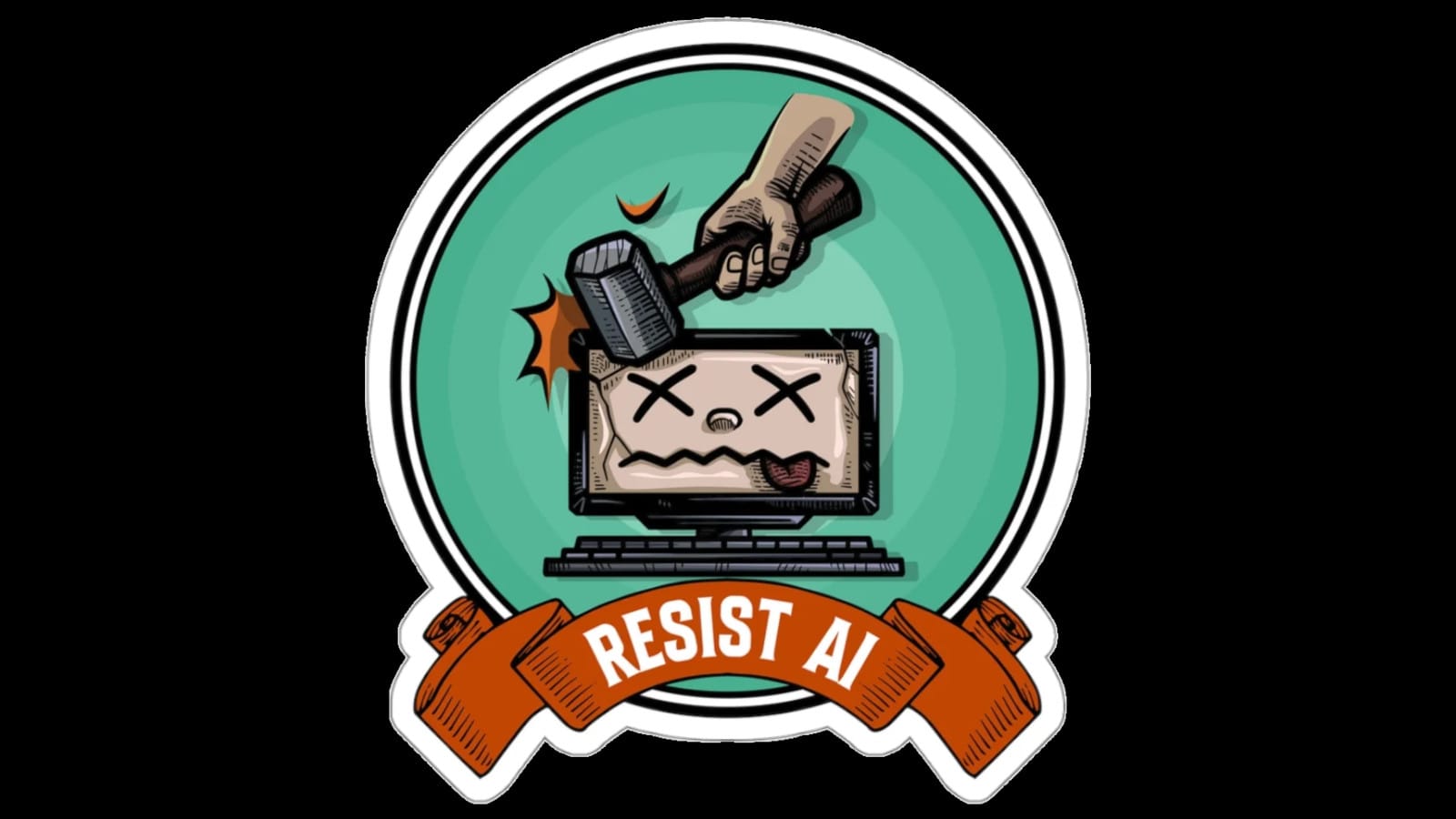
Look, for example, at this tepid, milquetoast and completely ineffectual blog of marketing advice from a company called 3rd + Lamar—probably itself written by an AI clanker—about how to “build trust” with audiences about AI. Amidst five yawningly predictable bullet points on how to market AI better, the author, not listed by name, says:
“AI often has a negative connotation because it’s perceived by many people as anti-human. So how do you humanize your product? Produce visceral, authentic content. Have your founder share the brand’s origin story. Explain why your company is in business beyond just making money. And feature real customers in your testimonials.”
Yeah, hate to tell you, 3rd + Lamar, but that’s just not going to work. You can’t “humanize” AI, which is, as you correctly point out, fundamentally anti-human. Do the people to whom AI is being aggressively marketed give a hoot in Hell about the “origin story” of a company’s brand? Why should they? And good luck asking a Silicon Valley AI startup company to explain why they’re in business besides the desire to profit. “Aside from that, Mrs. Lincoln, how was the play?” This kind of desperate messaging shows just how much AI-forward companies have painted themselves into a corner. It also subtly provides those of us who hate AI with ways to resist its marketing and messaging more effectively: we know what tactics they’re going to try to pivot to in order to sell us, and we can short-circuit them whenever they appear.
If you want another grotesque example of how AI can and ultimately will fail especially in the education space, look at this blog from September 2025 from a company called Winsome Marketing. This screed is even more fake and fraudulent than 3rd + Lamar’s blog, and was undoubtedly also generated by AI. This marketing company comes so tantalizingly close to self-awareness about how bad AI truly is but never quite gets there. In recognizing why teachers hate AI, Winsome Marketing’s clanker correctly concludes:
“Teachers worry about AI's impact on student creativity, critical thinking, and authentic learning. They fear technology dependence that reduces students' problem-solving capabilities. Messaging must address these developmental concerns explicitly.”
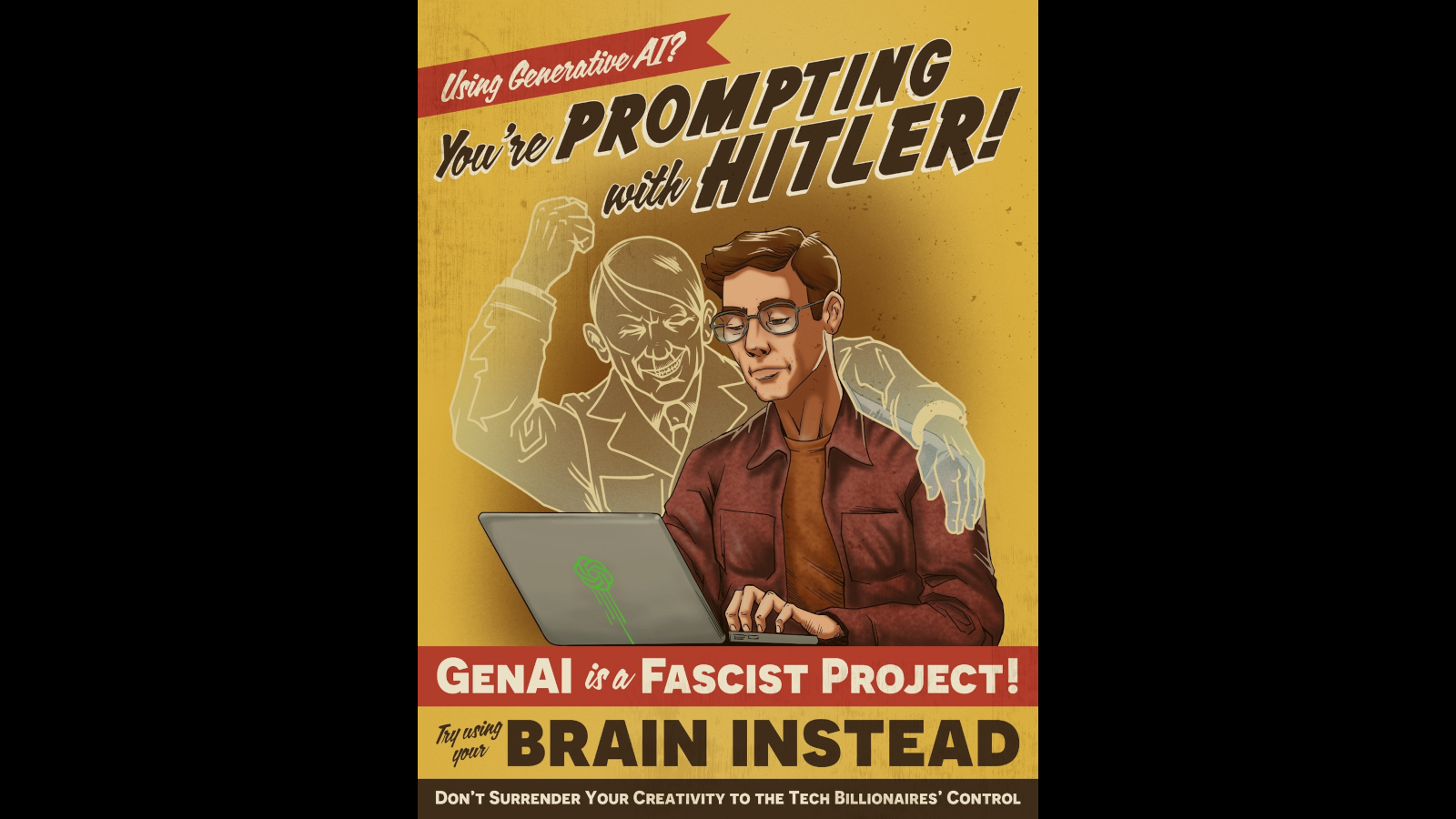
But in the end—after regurgitating a bunch of AI word slop about “lead[ing] with student outcomes,” all entirely abstract with absolutely no demonstrable proof—Winsome Marketing admits defeat. The article concedes:
“Expect that some educators will remain skeptical regardless of evidence or messaging quality. Focus resources on willing adopters while respecting the choices of those who prefer traditional approaches.”
That means that, if we continue to resist, the AI marketers will eventually give up. Somehow I doubt they really will “respect our choices,” but at least they admit there’s a point where they’ll give up. That’s the path forward. That is the result I want: for AI companies to give up, retreat, concede defeat, and slink back into the fetid boardrooms and idiotic marketing seminars they crawled out of. Those of us who hate AI should continue to resist its adoption in all forms. Demand its removal from our classrooms, our workplaces, our artistic and cultural expressions, and our lives. Boo the commencement speakers who praise it. Jeer the clueless tech executives who let the mask slip when they try to sell their garbage with slogans like “Stop Hiring Humans,” and call them out when they try to backtrack and claim that’s not what they meant. We can win the cultural fight against AI, and in the last year I think I’ve seen a lot of hopeful signs that we are winning.
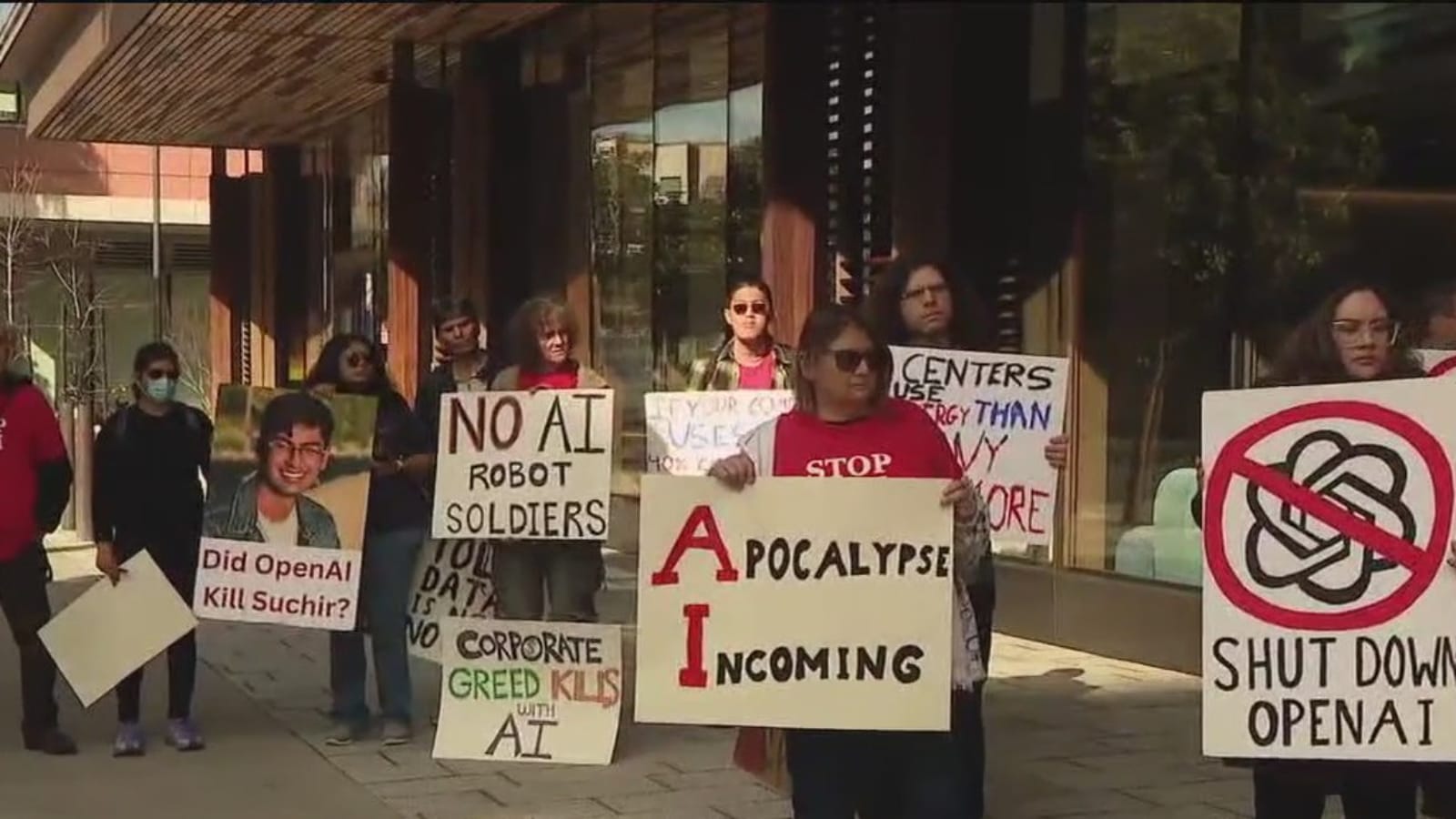
In the past year or I’ve started to grow skeptical of the platitude—which I myself have expressed on occasion—that technology itself is neither good nor bad, but it’s how we, humans, use it that matters. I think some technologies are inherently bad. Can anyone disagree that nuclear weapons are inherently bad? Similarly, I think there’s a case to be made that AI is a fundamentally fascist technology expressly intended for the destruction, demoralization, and denigration of humans. It is intended to destroy our jobs, narrow our thinking, degrade our culture, ruin our economy, entrench authoritarianism into our politics, and reduce us to digital slaves. That is the purpose of AI, the reasons it exists, the objectives its creators intended for it to accomplish. Unfortunately one cannot un-invent a bad technology, but we can relegate it to the fringe, something that may have an occasional or incidental use but is never relied upon for anything truly significant. I think the process of widespread marginalization of AI has already begun, and that scares the hell out of its creators and peddlers. I’m much more hopeful now that that’s the case than I was a year ago.
The Value Proposition
Why should you be reading this blog, or receiving it as a newsletter? This is why.
☕ If you appreciate what I do, buy me a virtual coffee from time-to-time to support my work. I know it seems small, but it truly helps.
📖 You could also buy (preorder) my newest book.
🎓 Like learning? Find out what courses I’m currently offering at my website.
📽 More the visual type? Here is my YouTube channel with tons of free history videos.


Comments ()