Historic Photo: Panorama of San Francisco, 1878.
Groundbreaking photographer Eadweard Muybridge stitched together this panorama of the Victorian-era city seen from its highest point.
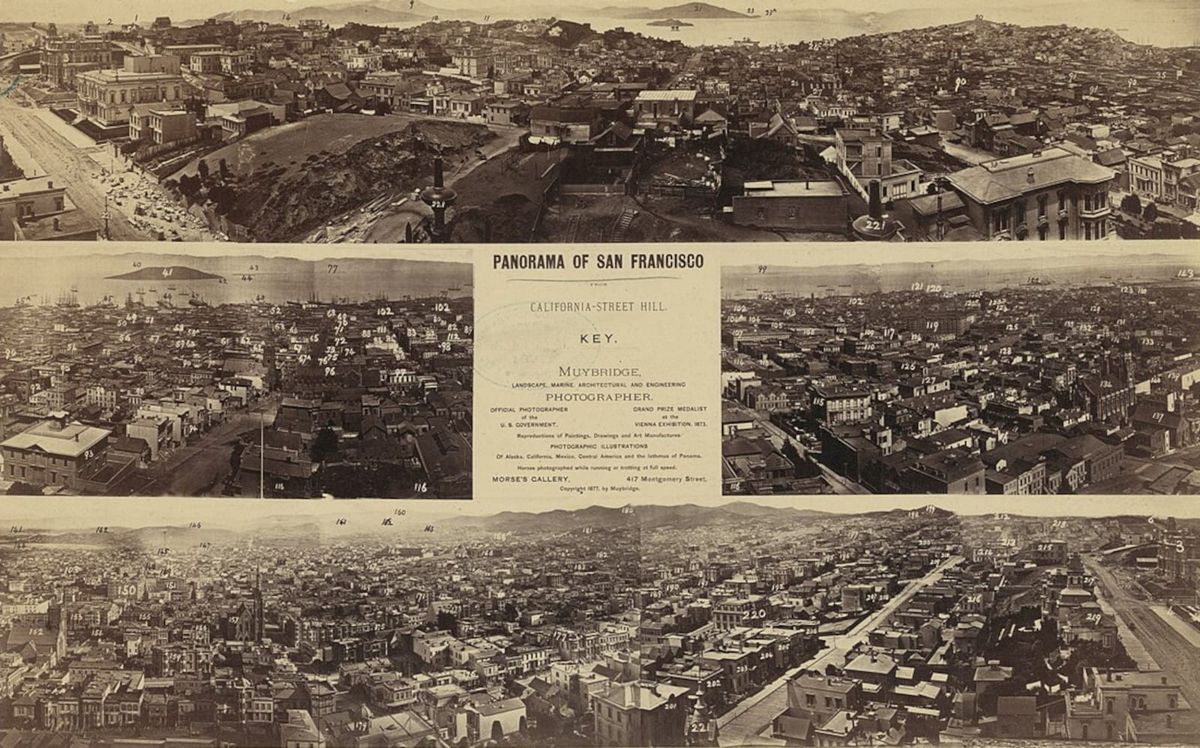
This picture is pretty amazing, but the presentation of it is a little awkward and doesn’t do it the full justice it deserves. In April 1878 British photographer Eadweard Muybridge, one of the true pioneers of photography in the Victorian era, set up a camera in the tower of the Mark Hopkins mansion, which at that time was the highest point in the city of San Francisco. Eventually scanning 360 degrees, he took the most comprehensive view of the city that was possible at that time. The panorama that was stitched together from these photos was composed of 13 prints and extended 17 feet in length when finally exhibited. The image above is sort of a collage of the constituent photos. If I showed the actual cut-together panorama in this article, it would appear as merely a tiny narrow film strip at the top of this page (or email). You can, however, see the final version, all assembled, here on Wikimedia Commons.
San Francisco was in a period of transition in 1878. This was after its famous “boom town” years during the Gold Rush era, which is where most histories of the city begin, but 30 years before the modern city arose from the ashes of the 1906 earthquake and fire. I’ve recently been doing some research on Victorian era San Francisco because I’ll be going there later this week, and I may make a video that showcases some of the few—very few—buildings and structures that managed to survive the 1906 disaster and the extensive rebuilding that followed. Very little of what you see in this panorama made it out of the double-whammy calamity of April 1906, and less still has survived into the 21st century. You’ll also notice that the city lacks most of the landmarks we associate with it today: Coit Tower, Alcatraz penitentiary, and above all the Golden Gate and San Mateo bridges. The city that you see here simply doesn’t exist anymore, which is why photos like this are so valuable.

?ref=gardenofmemory.net#/media/File:Panorama_of_San_Francisco_by_Eadweard_Muybridge,_1878.jpg)