The death of Hu Yaobang: The first chapter of a story that changed the world.
How the prosaic demise of a Chinese Communist bureaucrat triggered one of the most important movements in recent history.
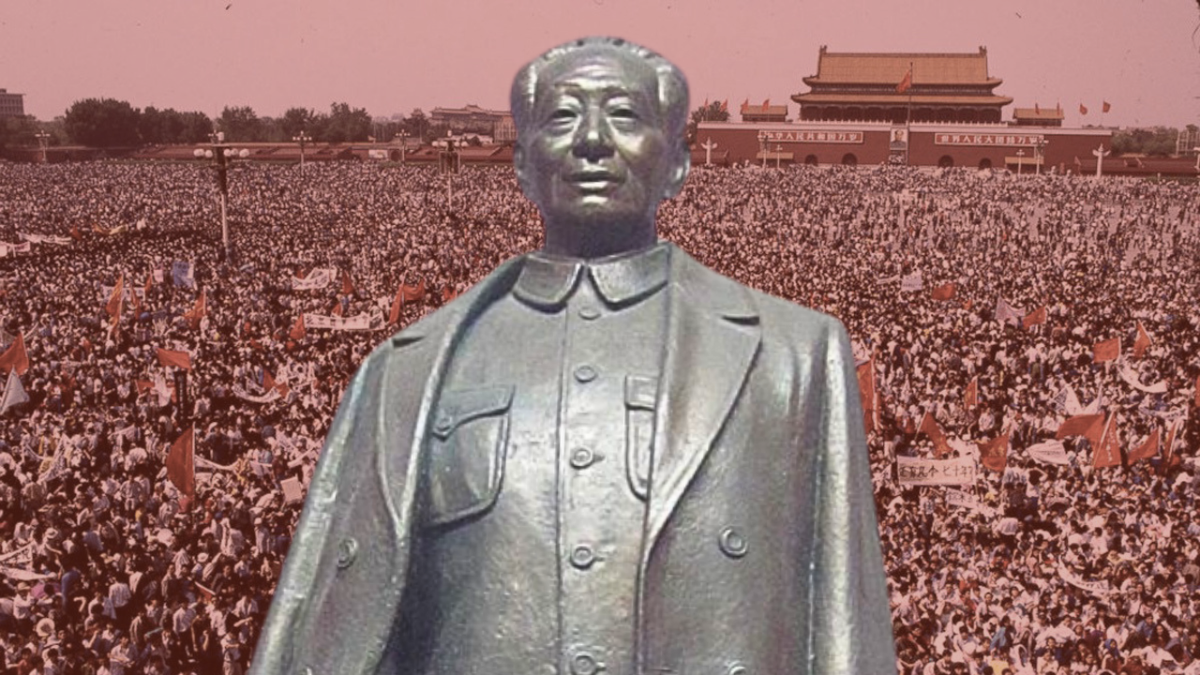
Thirty-seven years ago this week, on April 15, 1989, a man named Hu Yaobang died in a hospital in Beijing, China following a heart attack he’d suffered several days earlier. You’ve probably never heard of this person, and the fact I’ve just related sounds like an ending, especially to a life as eventful and tumultuous as Hu Yaobang’s. In fact it was only the beginning of another story, one so momentous that it turned out to be one of the pivotal events of the 20th century.
Hu Yaobang’s life could fill several books, and would make a fascinating movie. Much of it overlapped with the chaotic decades of the Chinese Revolution, which I profiled recently in a deep-dive video on my YouTube channel that I’m particularly proud of. Born in Hunan in 1915, four years after the Qing Dynasty was overthrown, Hu’s life was closely linked with that revolution, and especially its later phases that came to favor the Communists. Hu joined the Party at age 14. He participated in the Long March, the quintessential event that came to symbolize the political and social struggle of Communists during the Chinese Revolution. Involvement in the Long March was a key part of the “street cred” of the founding Chinese Communists. Hu was also captured by the Nationalists and forced to join a labor gang. During World War II, like most Communist Chinese, Hu laid low in Yenan, where Mao Zedong hoped that their Nationalist enemies would exhaust themselves fighting the Japanese and be easy pickings for a Communist revolution once the civil war between them and the Nationalists resumed. That’s exactly what happened. Mao and the Communists came to power in October 1949 and Hu Yaobang, together with his political mentor Deng Xiaoping, was given an office in the new government.
Hu served as chief of the Communist Youth League beginning in the early 1950s, which turned out to be key to his legacy. Despite his long service to the cause, Hu Yaobang was something of an iconoclast. He was absolutely not an apparatchik, didn’t follow the strict orthodoxy of the Party and was sometimes viewed as an enemy by Mao, especially during the Cultural Revolution. In this upheaval Yu was arrested and paraded through the streets wearing a wooden collar as punishment for political crimes. He was also sent to do forced labor (again) and might have died in obscurity if his mentor Deng didn’t have the political skill—and good fortune—to win the knock-down, drag-out power struggle that convulsed the Chinese government after the death of Mao Zedong. With Deng’s victory Yu was on top again, and by the 1980s he found himself General Secretary of the Communist Party, second in power in the state only to Deng Xiaoping.
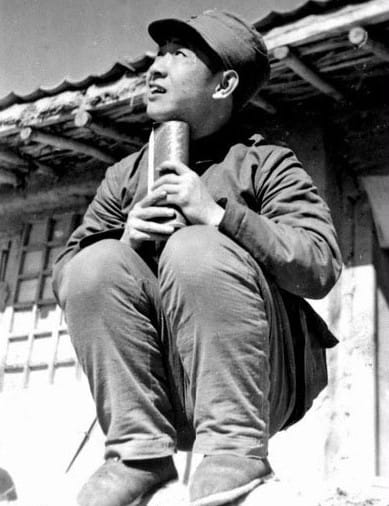
It was in this capacity that Hu truly earned his place in history. China’s political history in the 1980s was the story of a long struggle between reformers, who wanted to modernize Chinese Communism and bring it into the modern age, and hard-liners who feared any erosion of their power. Hu generally sided with the reformers. In December 1986, a series of demonstrations occurred on many university campuses in China. Students—much like Western college students in the 1960s—were calling for reforms, openness and a more flexible attitude on behalf of their political leaders. Deng Xiaoping was alarmed by these protests, but Hu Yaobang refused to carry out Deng’s order to fire political leaders who advocated dialogue with the students. This cost Hu his job. In the winter of 1987 he was forced to resign his high office, but was retained as a member of the Politburo.
So what does this all mean? How do these arcane intrigues in the world of Communist politics figure into one of the greatest events of the century?
Like this. When Hu Yaobang died on April 15, 1989, students across China, but particularly in the universities in Beijing, were hit hard by his death. They saw him as one of the few champions they had at the high levels of government. Part of it was Hu’s initial leadership of Communist youth in the first few decades after the 1949 revolution, but it also had to do with his reformist iconoclasm in the 1986 protests. A few students created a small memorial for him in Beijing’s large open square, whose name is Tiananmen. The mourning and memorial for Hu Yaobang soon became, in the eyes of the students, an opportunity to reopen dialogue with the government about reform and democracy. Within a few weeks, students from all over China had come to Tiananmen Square, and the political movement that began there became a keystone in Communist China’s recent history. The protests ended badly, as we know, with the unconscionable massacre of demonstrators in and around the Square in June, but Hu Yaobang’s quite prosaic death was the fuse that touched off this saga that changed the world.
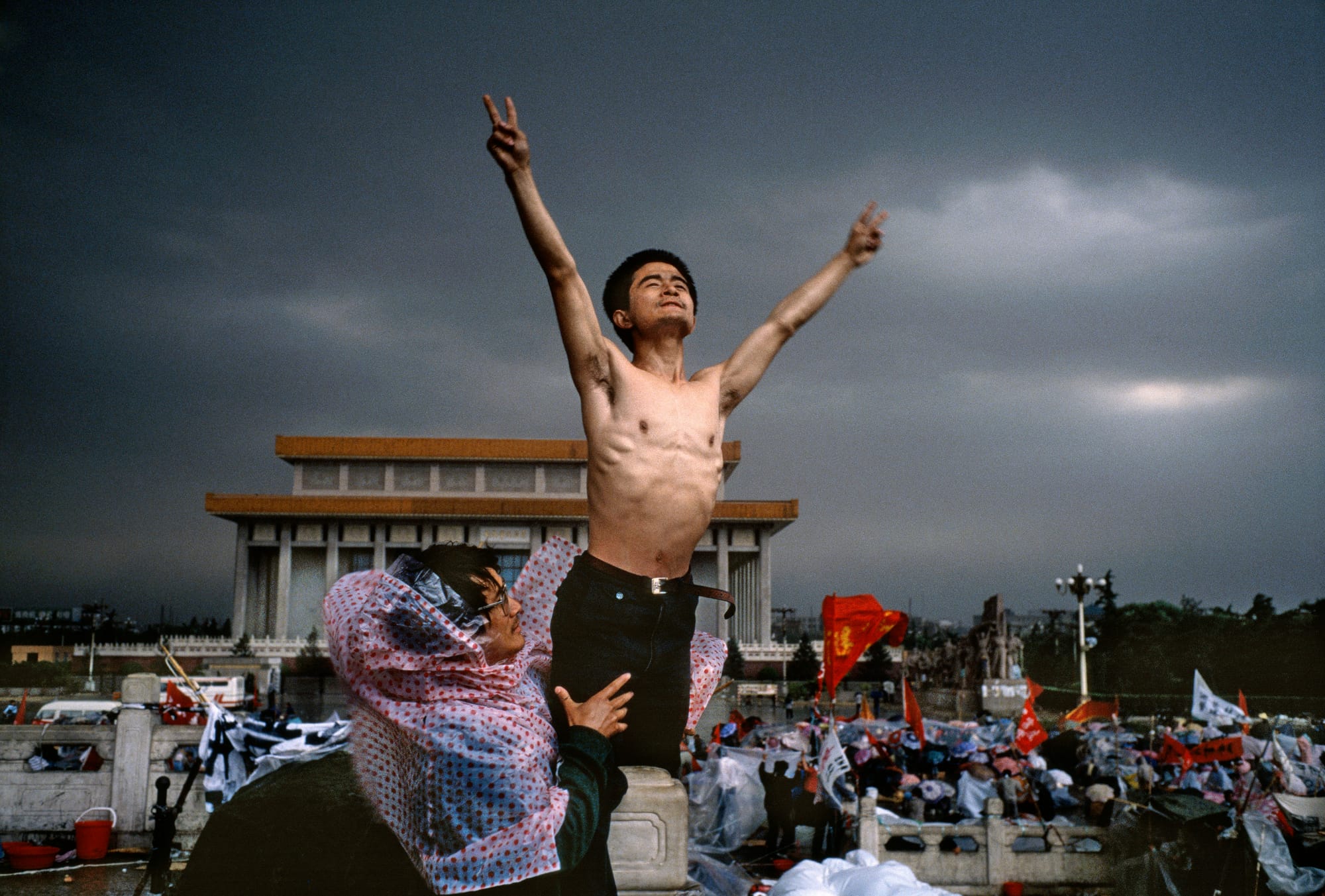
The Tiananmen movement had repercussions well beyond China. There’s an argument to be made that the unsuccessful protest movement in Beijing in the spring of 1989 was one of the triggers of the ultimately successful movements in Eastern Europe in the autumn of that year. While the fall of Soviet Communism was probably inevitable, the precise sequence of events that triggered it is important, and Hu Yaobang, I think, has a place in that history. Despite his amazing and eventful life, Hu Yaobang’s true contribution to how the recent past has unfolded was the timing and circumstances of his death. I find that fascinating to ponder, and worth a thought.
The header image of this article (the statue) incorporates a photo by Wikimedia Commons user Huangdan2060, used under Creative Commons 3.0 license.
The Value Proposition
Why should you be reading this blog, or receiving it as a newsletter? This is why.
☕ If you appreciate what I do, buy me a virtual coffee from time-to-time to support my work. I know it seems small, but it truly helps.
📖 You could also buy my newest book.
🎓 Like learning? Find out what courses I’m currently offering at my website.
📽 More the visual type? Here is my YouTube channel with tons of free history videos.
Comments ()