Dreaming of fictional “Supercomputers” in an age of AI.
The fictional idea of a "computer that can do anything" hasn't changed. Our idea of what "anything" means has.
This article is going to be a throwback to something I wrote years ago, but which has, I think, contemporary relevance given the strange age of AI in which we find ourselves. No, this is not just another angry fist-shake at AI—my disdain for this fulsome and fascistic technology should be well-known by this point—but rather some thoughts on how we think about computers, and how those conceptions have changed over time. But first, let me explain what you’re going to read.
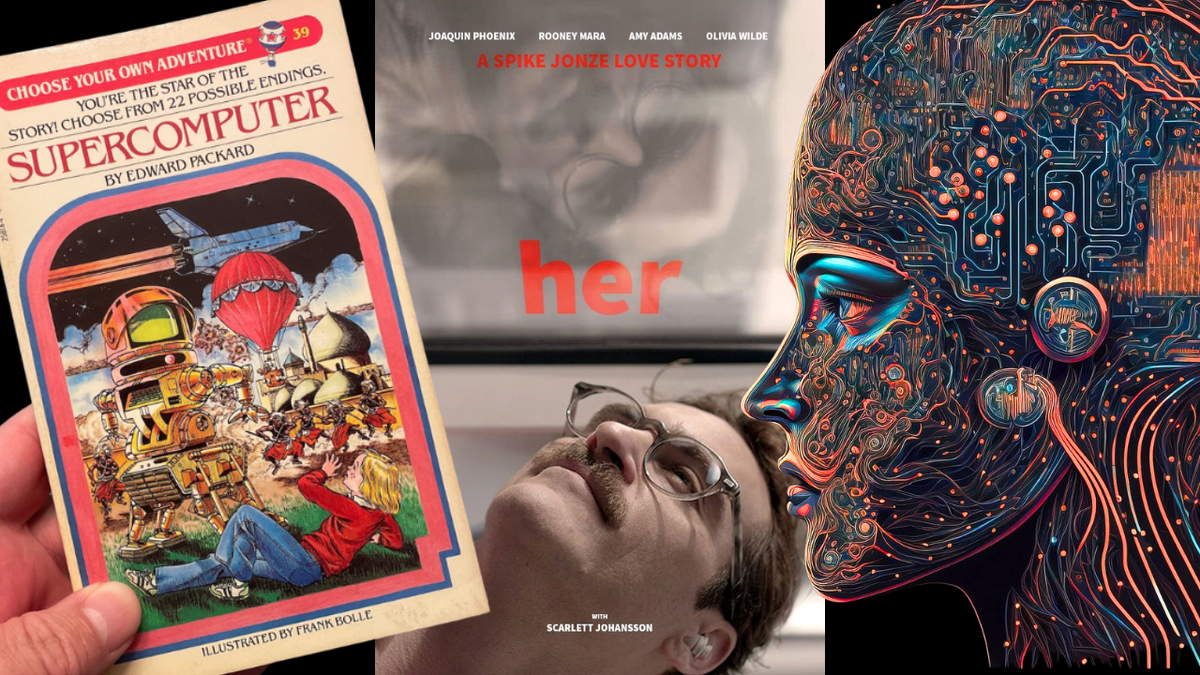
On my old blog, the original Wordpress-era SeanMunger.com, I did a running series of articles where I reviewed the Choose Your Own Adventure novels. If you were a kid in the ‘80s or ‘90s, you remember these: thin paperback volumes, written in second-person narration, in which “you” are the main character and every so often you have the ability to choose what to do and where the story goes. I grew up on these books and have long curated a collection of them. Fairly early in the lineup, book number 39, was one called Supercomputer, written by Edward Packard, one of the two original founders of the series (R.A. Montgomery was the other). Supercomputer was published in December 1984 and I reviewed it on my blog in October 2014, a dozen years ago. By coincidence about that same time I first watched a film, Spike Jonze’s Her, starring Joaquin Phoenix. I used my review of Supercomputer to segue into discussing the issues that film provoked. Now, 12 years later, real-life technology has caught up, in a sense, to some of the fantasies these works of fiction dealt with.
First, I’ll reproduce my 2014 article, reviewing Supercomputer and comparing it to Her. Then I think it’s worth talking a little further about the literary trope of “the computer that can do anything” in the context of the AI era.