Behind the Scenes: Los Angeles, An Environmental History.
My latest video on how and why L.A. got to be the way it is has been a long time in the making.
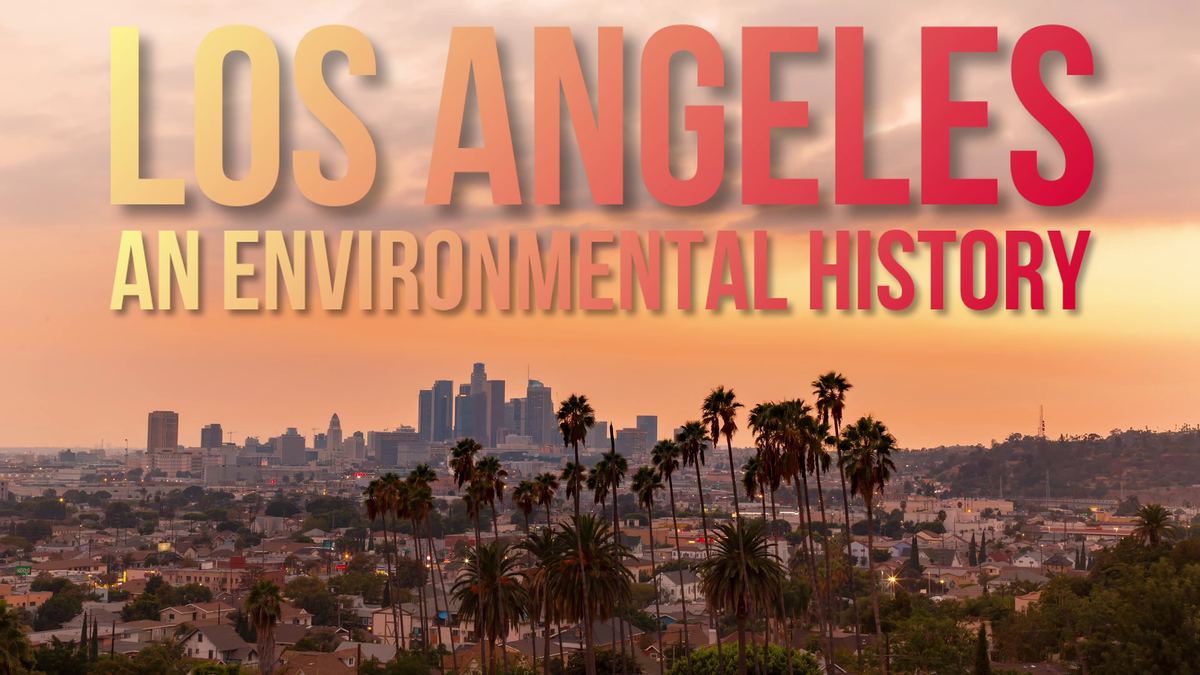
It’s been an uncommonly long time since my last article here. The subject of this article is at least part of the reason why: I’ve been working hard on my latest YouTube video, which went up today (November 15, 2026). It’s called “Los Angeles: An Environmental History.” Looking it over as it neared completion, I don’t think it’s hyperbole to say that it may well be the best video I’ve ever done, or at least I think so. Whether general viewers share that sentiment remains to be seen—maybe they will, maybe they won’t—but even if it flops I’m still proud of it and glad I made it, even though it took much longer to complete than I anticipated. As is usual with these companion-piece articles, I have embedded the video itself below.
The title is a blunt description of what the video is about. Since its founding in 1781, and even long before, the history of Los Angeles and the people who have lived in that area have been shaped very directly by environmental factors. From the Spanish missions and Mexican rancho days where cattle was the mainstay, to the rise of Los Angeles as a center for film and the arts, defense and high-tech and especially transportation, to its modern incarnation, L.A.’s environment is unique, challenging and complicated. In the video I examine the environmental history of L.A. from three interconnected angles: the story of its water, its land and its air. The water story is probably the one most well known to the general public, largely as a result of having been the background (heavily simplified and fictionalized) of the classic 1974 movie Chinatown. Others know the story of the changeover of L.A.’s transportation from mass transit to private cars and freeways from its telling in the 1988 film Who Framed Roger Rabbit. As my video shows, the real environmental history of Los Angeles goes much deeper than these subjects. I hope viewers find it as rich and fascinating a tapestry as I do.