Toward a theory on the death of the Democratic Party.
The modern Democratic Party is the least successful political organization in American history. Here are my thoughts on why.

This is a companion piece to my earlier article on how the modern Republican Party has destroyed itself in the past 40 to 60 years. We are, I think, in a unique moment in American history where both of the major political parties are in the process of implosion or significant reorganization, or soon will be. Such a time has not occurred since the 1850s, the years just before the Civil War. It’s also an unusual time because, in the rigidly binary two-party system that has existed in the United States since the 1790s, it’s usually a zero-sum game: what ails one of the major parties usually inures to the benefit of the other. That may not be the case in 2020s America. The Republicans may be nearly dead, but the Democrats are in just as bad shape—perhaps even more so. Here are my thoughts on why.
The modern Democratic Party is probably the least successful major political organization in American history. Today in 2026, the United States and its political, social and economic framework bears so little resemblance to the stated goals the Democratic Party has had for the country that one wonders if we’ve been living in a one-party state since 1980. Yet Democrats have had five Presidential terms in that time and have controlled at least one house of Congress for a significant chunk of it. Thus, the failure of the Democratic Party can’t be chalked up to lack of electoral success. It goes much deeper than that. The history of the Democratic Party is an abject and almost uninterrupted litany of failure, a chain of missed opportunities and bad decisions so long that it simply beggars the imagination. This is a party utterly bereft of ideas, with senile and incompetent leadership, poor strategy, inept messaging and a total lack of self-awareness. Historians of the future will be extremely harsh in their judgments of the late 20th and early 21st century Democratic Party, and they should be. Democrats bear significant responsibility for the decay and destruction of the United States as a world power and as a democratic (small-d) system.
The long, sad story of Democratic Party failure begins, as the stories of the fall of empires usually do, at the height of its power and achievement. In 1964 Lyndon B. Johnson was elected to a term in his own right as President in a popular and electoral landslide that cemented FDR’s 1930s-era New Deal as a permanent revision to the American social compact. Conservatives had tried somewhat ineffectually to push back against the New Deal for the previous 30 years, but even Eisenhower had left most of it in place. In early 1965, LBJ and the heavily Democratic Congress sought to run the table on major liberal priorities, from civil rights to welfare, Head Start, Medicare, education, support for arts and science, legal reform and the environment. Then Johnson put a torch to it all, and his own historical legacy, by making possibly the worst decision made by a Democratic President in the entire 20th century: he escalated the war in Vietnam by deciding to commit tens of thousands of U.S. combat troops directly to prop up the corrupt regime in South Vietnam. This, I think, was the pivot on which our last 50 years of history turned.
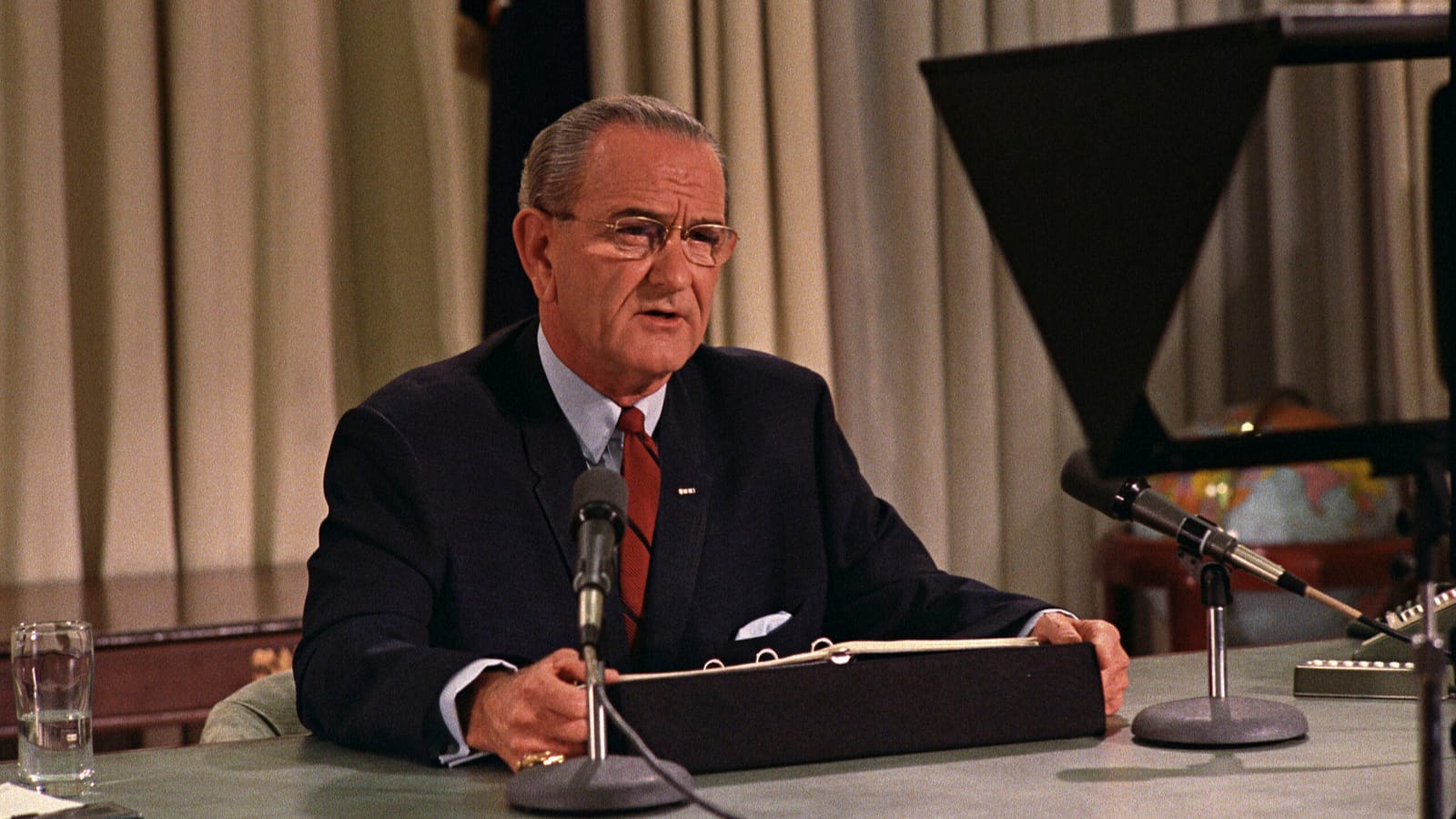
To be sure, Johnson was following the counsel of most of his advisors, whom he’d inherited from John F. Kennedy, and there’s significant evidence to indicate that, had he not been assassinated by Lee Harvey Oswald in Dallas in November 1963, Kennedy would have escalated the Vietnam War in some respect as his successor did. In many respects, though, Johnson deserves more of the blame because he was more far-sighted politically than Kennedy and had far deeper political horse sense, which means he should have known better. Johnson was mightily reluctant to commit American forces directly to Vietnam—the idea that he was eager to do so is a misconception spun mostly by conspiracy theorists—and the quagmire in which he found himself by 1968, when he decided not to run for re-election, deeply troubled him in part because it was so much his own decision. The division over Vietnam split the Democratic Party in 1968 and handed an opportunity to Republicans to win with Nixon’s cynical Southern Strategy, which played on conservatives’ nascent or overt racism. Nixon was a true believer on the Vietnam War, and escalated again in 1970. His political strategy became one of painting Democrats as “weak” and unwilling to make hard choices especially on military and foreign policy affairs. That strategy, opportunistic in the early 1970s, is a large part of why Democrats became as spineless as they did after that.
In 1972, activist Democrats, particularly South Dakota Senator George McGovern, successfully changed the rules of national-level Democratic politics to try to take the process of candidate selection out of “smoke filled room” territory and put it firmly in the hands of Democratic primary voters. This was a natural reaction following the disastrous 1968 Chicago Democratic Convention. But it subtly introduced dynamics into Democratic Party processes that, over time, favored a “race to the bottom” system of nomination, and also burdened the party by putting it on a short leash of donations and campaign finance, usually tied to the influence of interest lobbies. McGovern himself was an extraordinarily weak Presidential candidate in 1972 who was utterly annihilated by Nixon in the election that year. Carter’s narrow victory four years later was a fluke that capitalized on voters’ disgust with Watergate. Carter earnestly pursued liberal democratic policies at the end of the 1970s but couldn’t make them stick, and in any event everything he did was immolated by Reagan after his mandate victory in 1980.
The Democratic Party stubbornly refused to learn anything either from its (few) successes or its (many) failures in this period. Congress, especially the House of Representatives, had been Democratic-controlled since the 1950s, and the farther it got from there the more lazy and corrupt Democratic politicians in it became. Plenty of Americans opposed the Reagan revolution, and for good reason; yet the best standard-bearer the party thought it could field against him in 1984 was the feckless Walter Mondale, the biggest electoral loser of all time at least by one metric. Republican narratives were simple and repetitive: Democrats are tax-n’-spend socialists, weak on crime, weak against the Soviets or Saddam or terrorism or other potential enemies, and want to give your money away to women and people of color. Instead of pushing progressive policies even more aggressively—and going for the jugular to fight fire with fire when it came to Republican tactics—Democrats essentially gave battle on Republican terms, protesting, “No, we’re not!” and then bending over backwards to try to demonstrate now not they were to Republicans’ usual taunts. As a whole, Democratic Party politicians became more conservative, because they implicitly conceded that standing for progressivism was somehow dirty or illegitimate. In doing so they betrayed liberal and progressive ideas that have been overwhelmingly popular for decades.
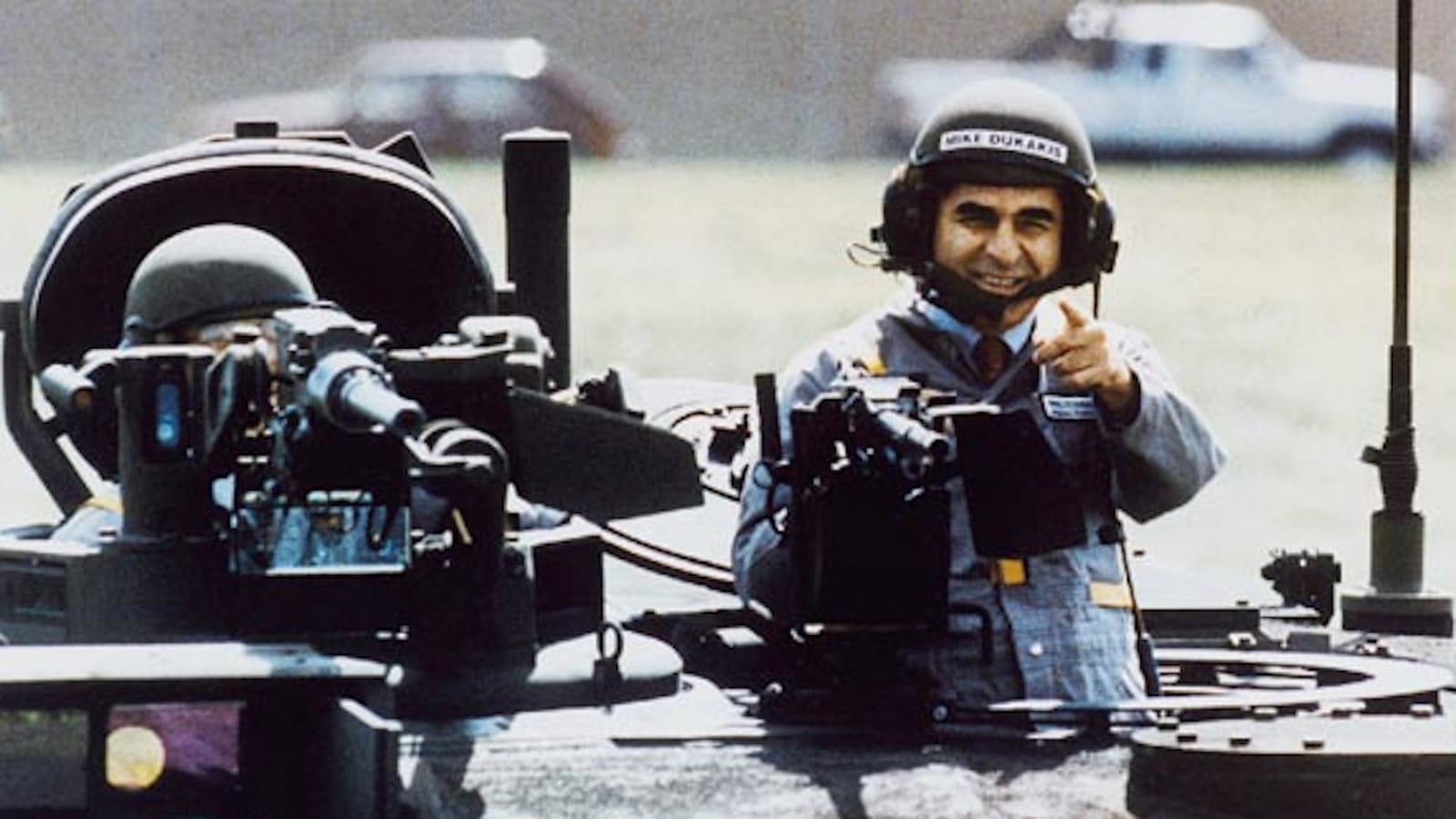
This explains the success of Bill Clinton at the beginning of the 1990s. Far from being a liberal in the JFK/LBJ tradition, Clinton was essentially a conservative, and most of what he did in office advanced conservative, rather than progressive, priorities. He terminated welfare programs, vastly increased the oppressive power and the heavy weaponry of the police, came out in favor of “regime change” in Iraq, and took the U.S. on various military adventures, from the Battle of Mogadishu to involvement in wars in the Balkans. And as the sole national-level Democratic Party electoral success story between 1980 and 2008, he unfortunately set the thinking, “Democrats have to be this way if they want to win.” In the Clinton era there was no serious attempt to retool or reorient the party in a direction anything other than conservative. Clinton and 1990s-era Democrats essentially removed broad-stroke liberal policy goals from the realm of the possible in American politics, and they did it by choice, not out of necessity.
In 2008, history offered a golden opportunity to revitalize and remake the Democratic Party. Running true to form, the Democrats totally squandered it. The disastrous and embarrassing presidency of George Bush II was defined by the Iraq War and economic mismanagement in the hands of big business which led to the financial crash of 2008. Democrats actively aided and abetted both of these crimes, in the case of Iraq by not pushing back in any significant way against Bush’s drive to war, and in the case of the economy by consistently kneecapping government oversight of business, especially with respect to financial speculation and Silicon Valley tech firms. By 2008 the electorate had had enough, particularly of Iraq. Barack Obama, who at least qualified as a genuine progressive, took deft advantage of an electoral opening that had been handed the Democrats mostly on a silver platter by Republican missteps.
To his credit, Obama did pursue one significant liberal policy milestone, that being the Affordable Care Act—though even this was originally the brainchild of a conservative Republican (Mitt Romney) and was far more tailored to the will of for-profit insurance companies than those of ordinary people who desperately need universal single-payer health care, which most other civilized countries have had for decades. But Obama and Democrats could truthfully say, “See? That’s some progress, right?” and Obama was reelected in 2012 largely on this message. But a fundamental reorientation of the Democratic Party toward the progressive principles that, even in 2008, a solid majority of Americans still wanted was never seriously discussed, much less attempted. Obama and the Democratic Party he led were unwilling to break with the Clinton-era orthodoxy that Democrats should, and must, govern from the center, even at a time when Republicans were lurching grotesquely toward the far right.
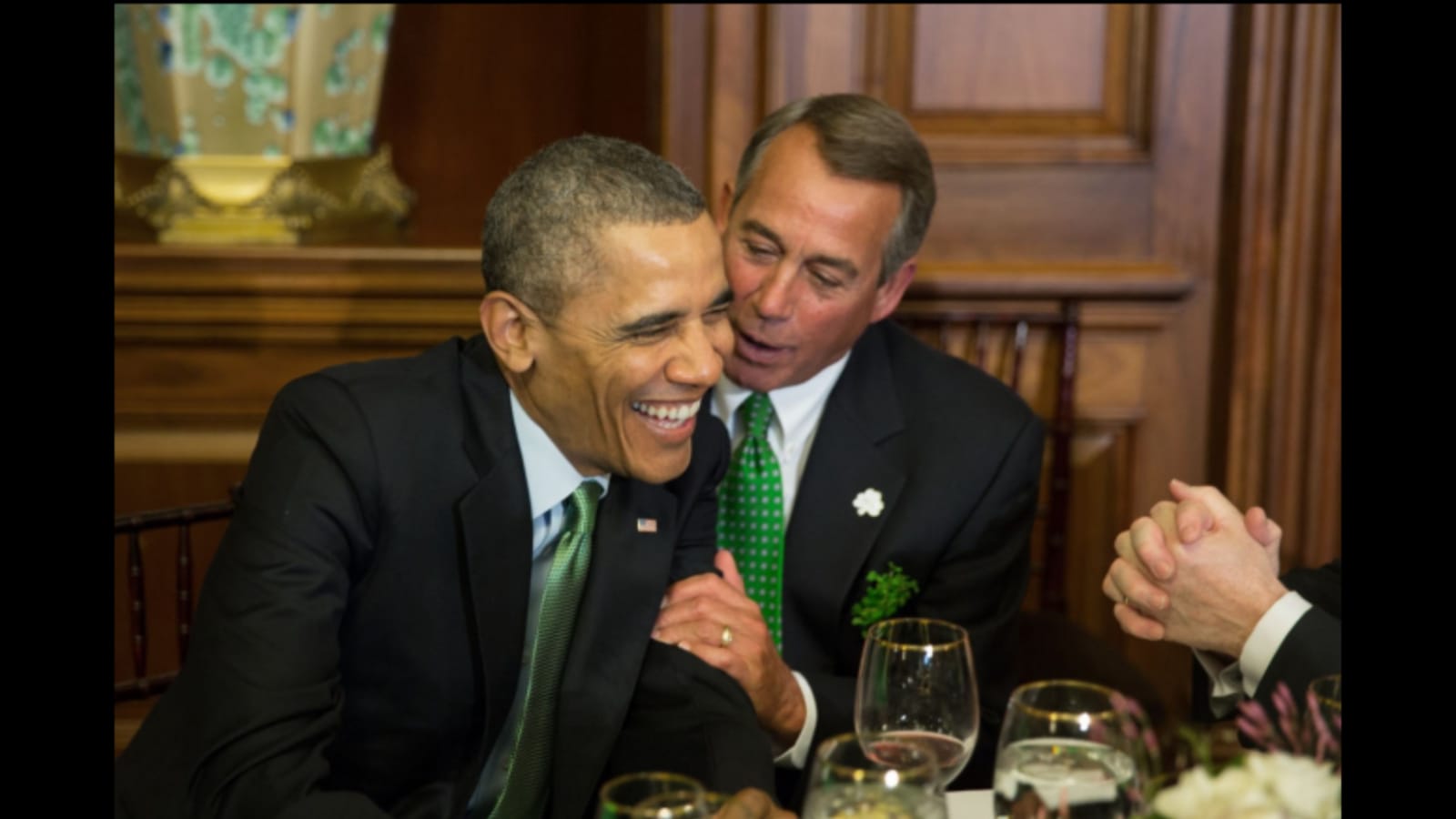
This is not just a failure of national-level leadership. Right down to the local levels where milquetoast suburbanites were contesting school board and utility bureau seats, the Democratic Party is full of infighting, squabbling, lack of cogent organization and especially lack of any sort of far-sighted vision. Since the turn of the century Democrats have been particularly bad at succession planning, utterly failing to lift a finger to engage younger voters or progressive activists for anything more substantive than door knocking or phone bank campaigns. For a decade I was on numerous Democratic Party mailing lists, and virtually 100% of the outreach consisted of repeated hysterical appeals to donate pocket-change-sized amounts of money, often in the form of daily emails with subject lines like, “Nancy Pelosi needs your help, Sean!” The vast majority of the daily activity of the Democratic Party seems focused not on changing anything on the ground but in hustling people for money. This problem is especially bad for Democrats, who generally lack deep-pocket corporate donors in the same numbers as those who support Republicans, and thus are forced to panhandle a million people for $5 each rather than make a corrupt deal with one person for $5 million. Neither model is a particularly good one on which to base the governance of the world’s largest (former) democracy.
The Democratic Party was already deeply broken by 2015, when the insane fascist Donald Trump began his hostile takeover of American politics, but Democrats again proved incapable of rising to the challenge or even understanding what the challenge was. I’m less convinced than many progressives were in 2016 that nominating Bernie Sanders, a then 75-year-old white New Englander, for President would have changed the party’s fortunes significantly, but it might’ve represented a baby step in the right direction. Instead, the Democratic machines fell reluctantly and unenthusiastically in behind Bill Clinton’s wife, who managed to convince many Democratic voters—including me, for a time—that she had some sort of rightful claim to leadership of the party whether we liked it or not. One of the most hated, distrusted and duplicitous politicians in America, Hillary might’ve capitalized on the desperation and alarm that many voters felt at the rise of Trump, and indeed even despite her inept 2016 campaign she won more popular votes than Trump did. But even if she’d won the Electoral College, what would’ve been different? She wouldn’t have taken America in a significantly new direction, nor could she have commanded the clout necessary to breathe new life into the old progressive dreams that LBJ squandered in the 1960s. Trump and fire-breathing Republicans would’ve waged aggressive and incessant war against her every second of her term, obstructing her every move, then argued that her lack of success was a reason to vote for them. Hillary Clinton might, by the skin of her teeth, have postponed the ascent of Trump by four years, but she couldn’t have prevented it.
Now, Democrats in the age of Trump are utterly powerless to stop the wholesale dismantlement of American democracy that they once helped to build. They can, and possibly will, win in 2026 or 2028 on backlash-to-Trump narratives, but the reasons Democratic politicians give for voting for them now usually boil down to some variation of, “Well, we’re better than nothing, right?” The insidious spirit of split-the-baby, half-a-loaf, something-is-better-than-nothing sausage-making politics has so metastasized within the core of the Democratic Party that if a Republican President proposed—as may come to pass—exterminating all trans people in America, Democrats would think themselves helpful and noble by suggesting, “Let’s compromise, and only kill half of them.” There is no plan. There is no leadership. There is no blueprint for the future. There are only pale echoes of the past. At this moment, Gavin Newsom is being talked about as a potential Democratic standard-bearer. Like the Clintons before him, he’s a conservative, and his limp appeal to progressive voters will invariably be to offer, once again, to split the baby or some mealy-mouthed preaching that half a loaf is better than nothing. Bernie Sanders, now age 85, won’t be on the scene much longer. Besides him, the only true progressive with anything approaching a national profile in America, Zohran Mamdani, got to be Mayor of New York in spite of the Democratic Party, not because of it. If this is the best Democrats can do, in an era of fascist takeover and global crisis, this does not bode well for their future.

Ironically, it was Bill Clinton, the conservative Democrat, who, in his acceptance speech for the 1992 Democratic Presidential nomination, quoted the Bible, Proverbs 29:18: “Where there is no vision, the people perish.” He said it specifically to mock George Bush I, who famously admitted he was not good at “the vision thing.” But these words are a fitting epitaph for the party Clinton came to lead and ultimately went a long way toward destroying. The Democratic Party has no vision and has not had one for almost 50 years. We, the people, are perishing as a result.
The Value Proposition
Why should you be reading this blog, or receiving it as a newsletter? This is why.
☕ If you appreciate what I do, buy me a virtual coffee from time-to-time to support my work. I know it seems small, but it truly helps.
📖 You could also buy my newest book.
🎓 Like learning? Find out what courses I’m currently offering at my website.
📽 More the visual type? Here is my YouTube channel with tons of free history videos.



Comments ()