Past imperfect: In defense of “Back to the Future, Part II.”
The second installment of the "Back to the Future" trilogy is, in many ways, the most thoughtful and interesting of the three.
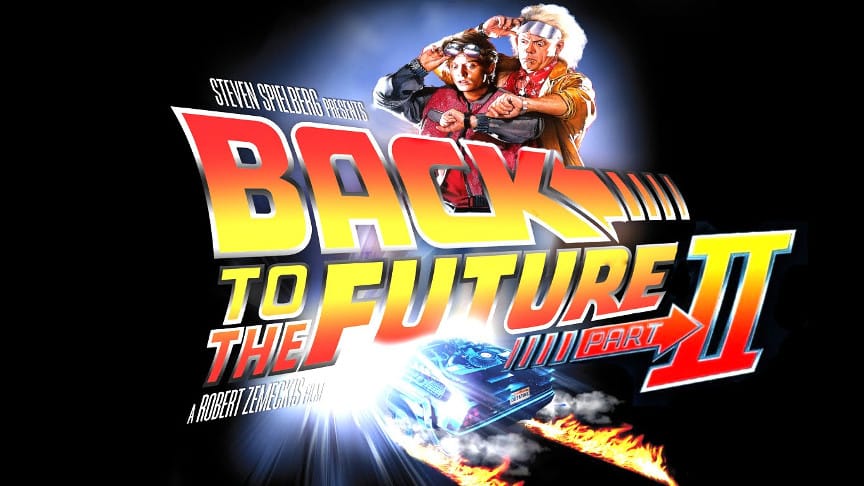
If you’ve been reading this blog for a while you may know that I occasionally do deep dive articles on movies, and the ones I pick to analyze are always a little quirky. Here, for example, is my write-up from last year on Sam Peckinpah’s 1978 film Convoy, his next (and last), and truly terrible follow-up, The Osterman Weekend, and my infamous dissertation on Love Actually. I’m fascinated by strange, offbeat or unusual films that have implications worth thinking about beyond simply judging the merit or entertainment value of the film itself. The one I’m doing today isn’t exactly obscure, but it is arguably strange and offbeat: the much-maligned 1989 sequel to the classic 1985 blockbuster Back to the Future. I think there’s a lot in this film worth considering, and it’s a completely different conversation from one we might have about the original. So, for what it’s worth, here we go.
To begin this journey I’m going to make a statement that probably many of my readers will disagree with. Of the three iconic Back to the Future films, Part II is the best. It’s the most thoughtful, probes the deepest into its subjects, it’s the most well-structured of the trilogy, contains its most imaginative (and darkest) elements, and develops its characters more than the other two. For my money it also features the best acting, coolest costumes and best special effects of the trilogy. Yet, of the three films released between 1985 and 1990, Back to the Future Part II is considered the runt of the litter, the “uneven middle” sandwiched between the first film, which is nothing short of a cultural icon, and the final one, which is a great deal more fun in a popcorn-entertainment sense. I’ve even heard people refer to Part II as nothing but an extended trailer for Part III. I couldn’t disagree more.