Forgotten flight: The lonely voyage of Apollo 6, and the terrible day it happened.
On April 4, 1968, an unmanned rocket blasted off from Florida. Turned out it was a good day to leave Earth.
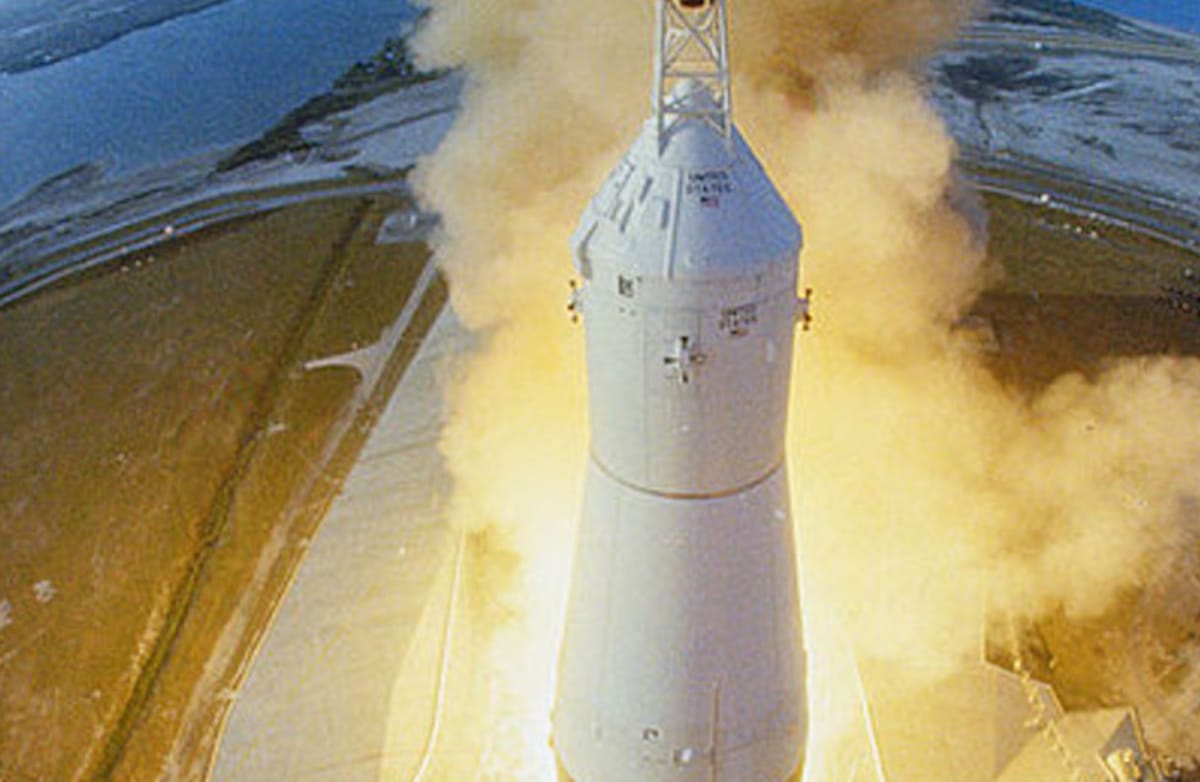
Fifty-eight years ago today a rocket blasted off from Cape Kennedy in Florida, orbited the Earth three times, and splashed down 10 hours later in the Pacific Ocean north of Hawaii. No one was on board. This flight was known as Apollo 6, and was one of the unmanned test flights conducted by NASA in its run-up to the manned missions that would eventually take human beings to the Moon. The main purpose of the flight was to test whether the spacecraft could withstand the major rocket burn of a “trans-lunar injection”—the blast from its engine that would send it toward the Moon—and whether the space capsule could successfully re-enter the Earth after such a maneuver. Apollo 6 proved that it could.
The day on which the flight occurred, April 4, 1968, was a good day to leave the Earth. For reasons that had nothing to do with Apollo 6 or the Moon, that day proved to be one of the most tragic days in American history. Civil rights leader Dr. Martin Luther King, Jr. was assassinated that day in Memphis, Tennessee by James Earl Ray. The anger and outrage in African-American communities, and the country at large, at this senseless act of terrorism boiled over in a number of riots and disturbances in urban communities across the US. The cause of civil rights and peace was set back years, if not decades, and would be compounded by another assassination, that of Robert F. Kennedy, only two months later.