Expulsion from paradise: The civilian evacuees from Hawaii after Pearl Harbor.
Thirty thousand people fled Hawaii in the wake of Pearl Harbor. Many never returned.
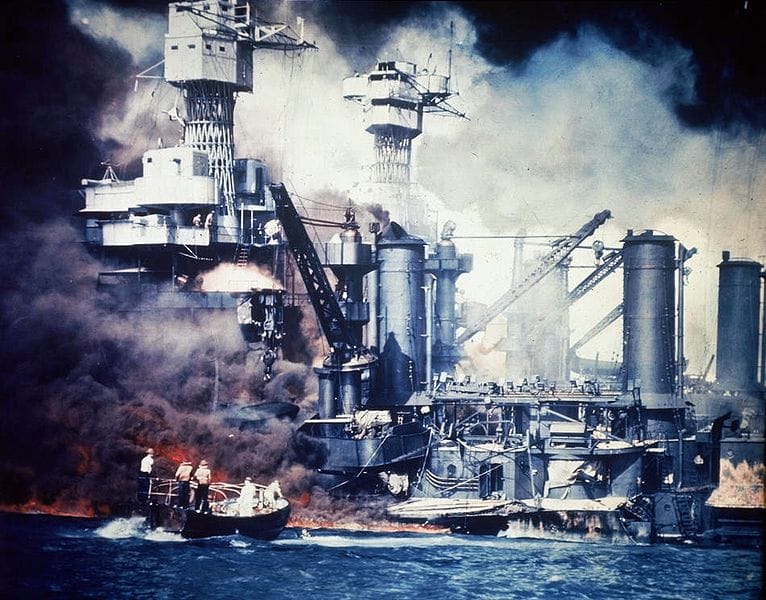
Everybody knows what happened at Pearl Harbor 84 years ago today. The events of that day figure prominently in my work on this blog (such as here) and in my work on YouTube and my history classes. I even have, in my ever-growing collection of stock footage that I use for my videos, several movie files marked “Pearl Harbor footage.” I’m not going to tell the basic story again here. Instead I want to focus on an aspect of the Pearl Harbor attack that isn’t well known: the story of those Hawaiians who had to leave their homes because of the outbreak of war, many of whom never returned. I think these stories are a reminder of the real human impact of war, as well as food for thought as to what it meant, in 1941, to be an American and a Hawaiian.
The Japanese raid on Pearl Harbor was primarily a military strike, but its consequences were perhaps most deeply felt among the non-military personnel—the ordinary Hawaiians who suddenly found themselves at ground zero of the Pacific War. Amidst the battleships and cruisers left burning and sinking in Pearl Harbor there were 49 civilians killed in the Honolulu area, ranging in age from 3-month old baby Janet Ohta to 66-year-old Soon Chip Kim. What’s interesting about the names of the civilian casualties (read them, here) is how multicultural they were. Many were of Japanese background; there were many thousands of Japanese, as well as Chinese, living in Hawaii at the time. The population of the islands was considerably more diverse than in most places in the mainland United States, with the possible exception of the largest cities.
Almost immediately after the attack—certainly within hours, possibly minutes—Hawaii was placed under martial law. Censorship of the mails and radio broadcasts clamped down on the morning of December 7. The military authorities were terrified of sabotage, and it must be remembered that the Pearl Harbor strike was only one part of a large cross-Pacific Japanese offensive: the Japanese struck Hong Kong, Malaya, Guam and Manila the same day or shortly after. There was a very real sense that Hawaii itself was going to be a battleground in the war between the United States and Japan. Consequently, a lot of people decided to leave, or to get their families out of the danger zone. Some were ordered to leave. Hence, many civilians were quickly evacuated from Hawaii to the U.S. mainland.
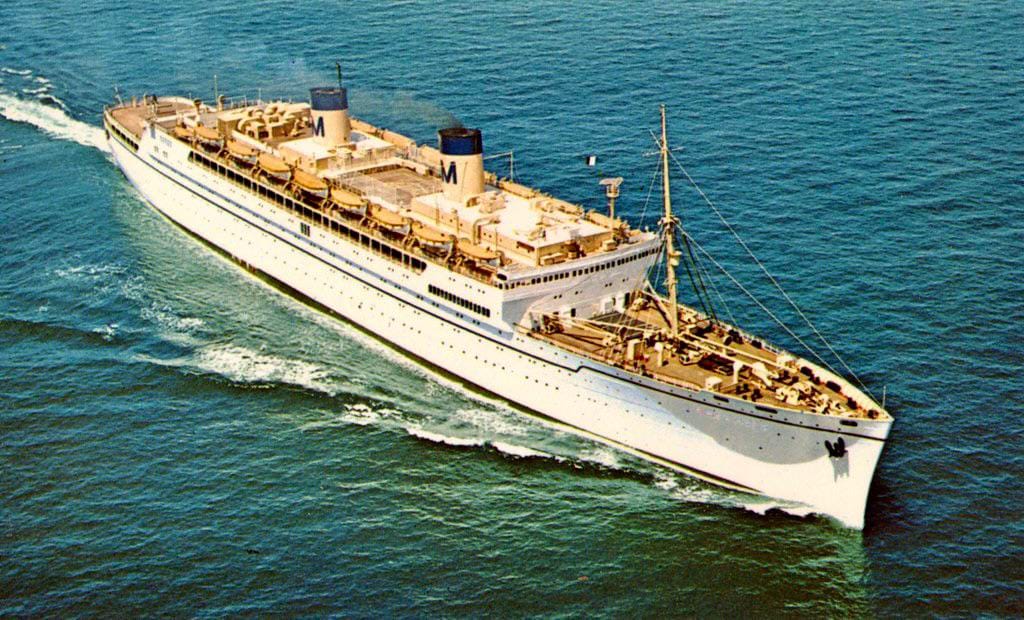
It was a pretty huge exodus, which makes it even more strange how seldom the story of it is told. About 20,000 dependents of U.S. Army and Navy personnel stationed in Hawaii left the islands in December 1941 and early 1942, along with 10,000 women who were not related to military personnel. Basically, any American ships that were anywhere between Hawaii and the West Coast at the time of the Pearl Harbor attack were suddenly diverted to ferry duty: carrying weapons and military supplies to Hawaii, and carrying women, children and wounded casualties from Pearl Harbor out. Many ships did this, among them the Matson Lines ship SS Lurline. In researching a previous version of this article I found an amazing first person story from a woman named Alice Adams, 10 years old at the time of the attack. Her father was an Army Air Corps crewman stationed at Hickam Field at Pearl Harbor. It was published on a website back in 2006 which went offline long ago, but it’s preserved on the Wayback Machine here, if you’d like to read the whole story. Here she describes being evacuated from Hawaii aboard the Lurline.
“We knew we would have to go back to the States. Where to? My Mom made plans with her sister in Baltimore to live temporarily with them. We were on a few hours’ notice, and on December 24th received word we would leave the next day. All there was in the refrigerator was a bowl of red jello.
I don’t remember how we got to the docks the next morning, but we hugged our Dad goodbye, and next thing I knew we were standing on the deck of a ship (the Lurline), waving to him — no band played Aloha Oi, we had no leis to throw overboard. A bright sunny warm sad Christmas Day, December 25, 1941. I cried and cried.
The Lurline was a Matson luxury liner converted to a troop ship, and we had a cabin with two rows of canvas bunks, three tiers high.
We were accompanied by a destroyer escort. There may have been another ship but I’m not sure. The ocean was rough and we all were slightly seasick. The dining room served good food, but I couldn’t eat, and the kind waiter was so worried about me, “you don’t eat any more than a little bird!” There were many children on this trip, and we played on the deck where there was a ping-pong table, and a ball flew off into the sea — we were afraid a Japanese submarine would spot it and sink us. We all were being constantly warned not to let anything fall overboard.”
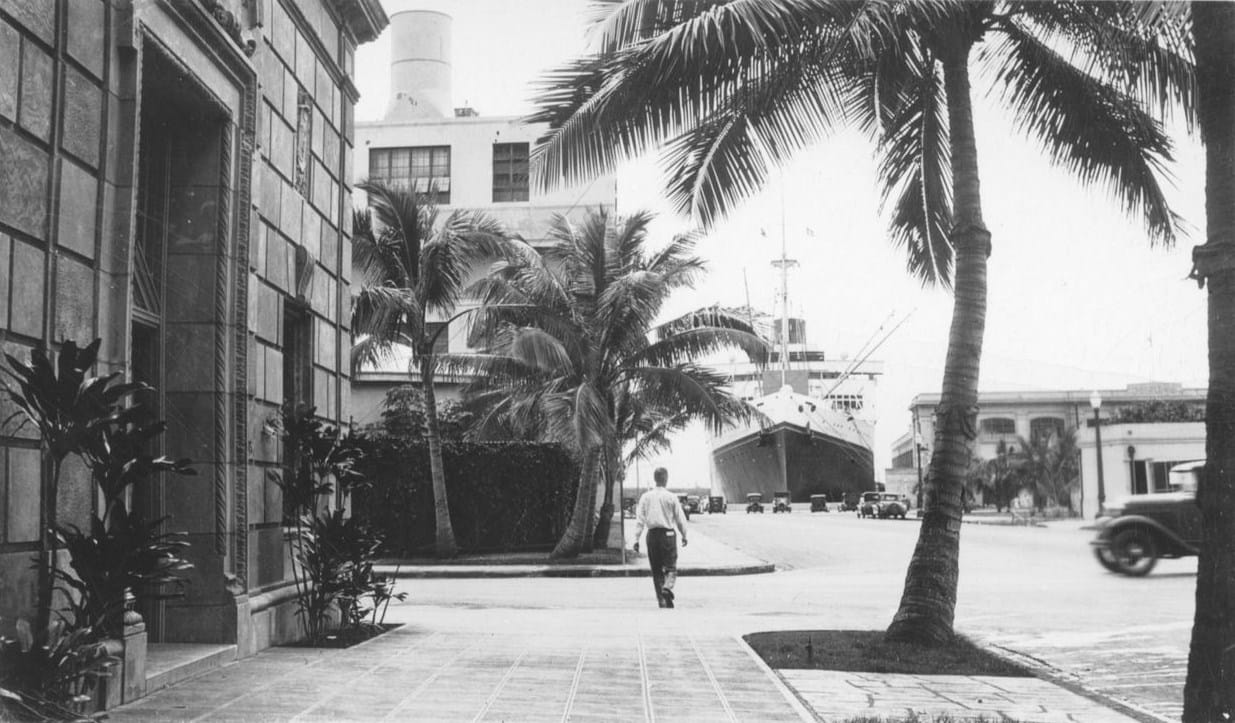
The evacuation voyages of the SS Lurline, as well as her sisters Mariposa and Monterey, were very pivotal in the careers of these well-known liners. What surprised me about the stories is how many of them are out there. In the 2010s, when I did live history lectures and presentations more often than I do now, a talk on the history of ocean liners was in my repertoire, and in it I mentioned the Lurline and the Matson Line trans-Pacific ocean liners very briefly. On at least two occasions after these talks elderly women approached me to tell me they had either sailed on the Lurline on one of the Hawaii evacuation voyages, or they had a family member who had. The stories they told were remarkably like Alice Adams’s. This was clearly a formative experience for a lot of people.
Despite how little it gets talked about, the evacuations from Hawaii were at least prominent enough to feature in James Jones’s 1951 novel From Here to Eternity, perhaps the quintessential American work of fiction to emerge from World War II. If you haven’t read it—I don’t blame you, it’s about 700 pages in most paperback versions—maybe you’ve seen the famous film made from it in 1953. The final scene, where the two women upon whom the story focuses, played by Deborah Kerr and Donna Reed, finally meet, takes place aboard a liner, which as shown in an establishing shot is almost certainly the Lurline, leaving Hawaii for the mainland. In a brief exchange of dialogue the Donna Reed character even states she’ll probably never return to Hawaii. The scene makes a much bigger emotional impression if you know the history of the event it’s depicting.
In researching this article I couldn’t get a reliable figure on exactly how many of the 30,000 Hawaiians who fled after Pearl Harbor eventually returned, whether during the war or after it. But as we’ve seen with mass evacuations in more recent times, such as the one after Hurricane Katrina, a sudden move for a traumatic reason like this often ends up being permanent. Thus, we’re certainly talking about a lot of people who never saw home again for whatever reason. For some, certainly, Hawaii was their paradise, and the serpent in the garden—the war—cast them out of it.
The Value Proposition
Why should you be reading this blog, or receiving it as a newsletter? This is why.
☕ If you appreciate what I do, buy me a virtual coffee from time-to-time to support my work. I know it seems small, but it truly helps.
📖 You could also buy my newest book.
🎓 Like learning? Find out what courses I’m currently offering at my website.
📽 More the visual type? Here is my YouTube channel with tons of free history videos.

Comments ()