A landmark 632 years in the making: the odyssey of Cologne Cathedral.
Why did it take Germany more than six centuries to finish what was once the world's tallest building?
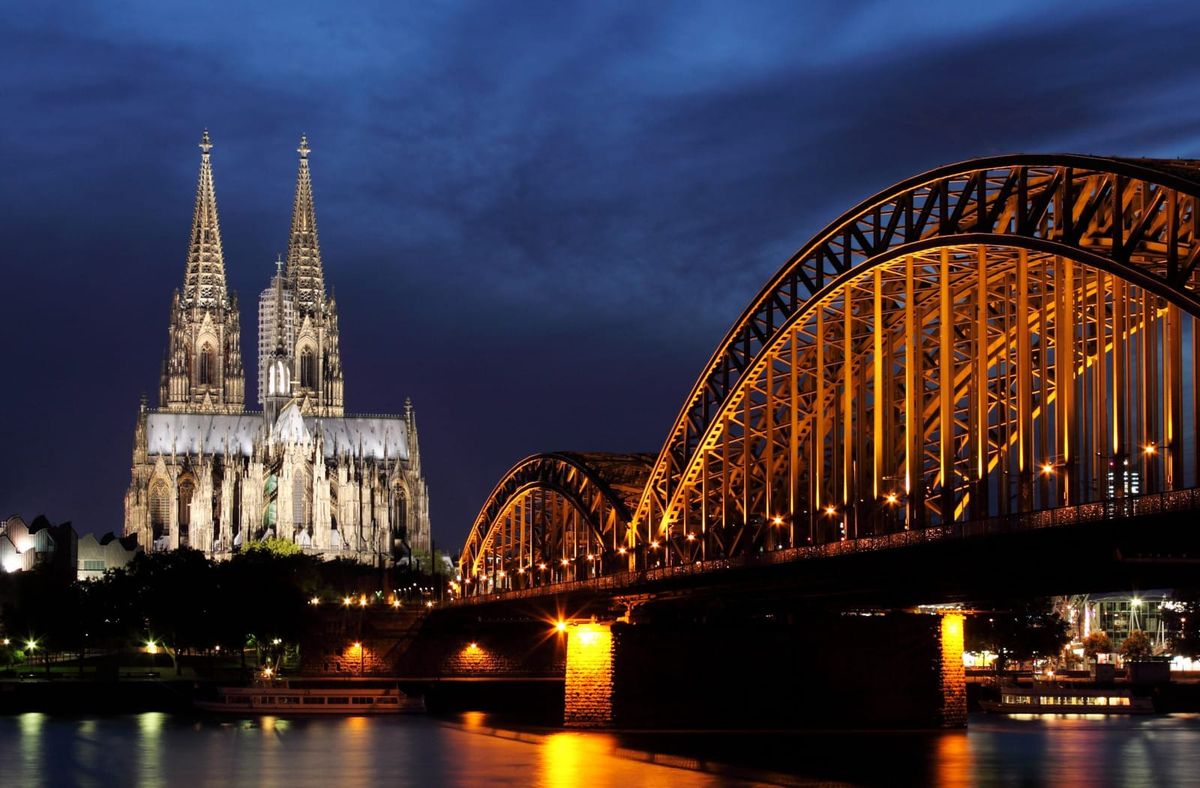
One hundred and forty-six ago today, on August 14, 1880, a dedication ceremony was held to celebrate the completion of Cologne Cathedral in Cologne, Germany. Kaiser Wilhelm I attended and the event was celebrated throughout the relatively new German Empire as a day of national pride. If this sounds to you like the beginning of the story of Cologne Cathedral, you’d be wrong—it’s actually much closer to the end. Construction on Germany’s finest Gothic church took a staggering 632 years.
The story of Cologne Cathedral begins not with construction, but destruction: specifically, the conquest of Milan, Italy by Frederick Barbarossa, the Holy Roman Emperor, in 1164. As was typical in medieval warfare in the Christian world, Frederick took a lot of plunder from Milan back to Germany, much of it religious in nature. He made off with the bones of the “three wise men” of Biblical legend, and after returning to Germany, Barbarossa commissioned a great artist to create a beautiful reliquary in which to house them. This wasn’t all just religious devotion. It was good business too. A relic as important as the bones of the Magi would attract thousands of Christian pilgrims to wherever they were housed, which meant an economic boom for the cities concerned. Cologne was chosen as the site of the reliquary, and master goldsmith Nicholas of Verdun began building the magnificent golden shrine for the purported Magi remains in 1180. The shrine, completed about 1220, became the Shrine of the Three Kings. By now Barbarossa was dead, but the succeeding Holy Roman Emperors decided a grand cathedral was needed to house it. On August 15, 1248, Konrad von Hochstaden, Archbishop of Cologne, laid the cornerstone of Cologne Cathedral.