A film about knowledge and wonder: “The Name of the Rose” at 40.
The film based on one of my all time favorite novels was a slow burn, but I've come to love it.
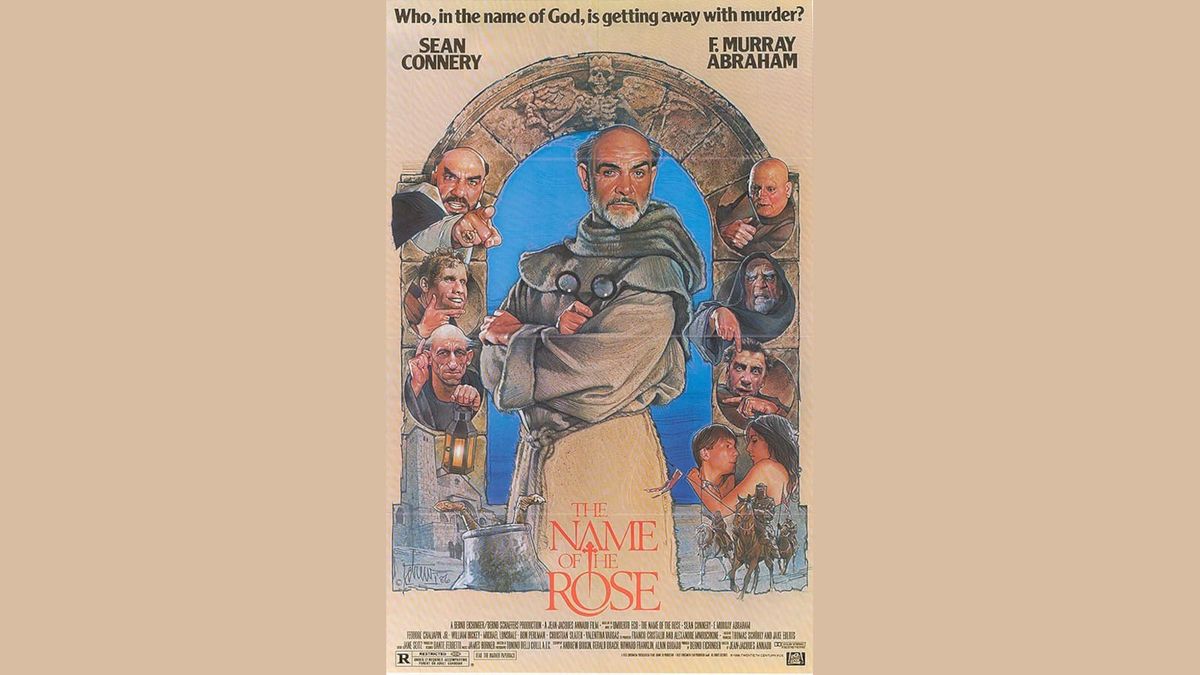
Forty years ago today, on September 19, 1986, the film The Name of the Rose, directed by French auteur Jean-Jacques Annaud and starring Sean Connery, was released in the United States. The picture did poorly on American shores but was a big hit in Europe, eventually grossing over $77 million (1986 dollars) against a $17.5 million budget. The film was an adaptation—a “palimpsest,” according to its own title card—of Umberto Eco’s classic medieval detective novel of the same name, originally published in 1980. Though not a huge blockbuster nor a game-changer in terms of its contribution to world cinema, The Name of the Rose is an interesting and noteworthy film, and one that’s meaningful to me on a personal level for a number of reasons. Having seen it again just recently I thought I’d write about it on its 40th anniversary. If you’ve never seen it or perhaps never even heard of it, I think it’s definitely worth a look, especially by the sort of savvy readers that those of you who are subscribed to the Garden certainly are.
As is the legendary novel it’s based on, The Name of the Rose is sort of a puzzle box of a film, an array of delightful surprises wearing the almost misleading wrapper of a period detective story. Taking place in northern Italy in the year 1327, the main character is the slightly eccentric English monk William of Baskerville (Sean Connery), who with his scribe and attendant Adso (Christian Slater) has traveled to a Benedictine monastery to attend a theological debate with other visiting religious scholars. However, just before his arrival, one of the monks has turned up dead, an apparent suicide under questionable circumstances. In short order several other monks are killed, undoubtedly murdered. William has to piece the mystery together while navigating the complex and treacherous religious politics surrounding the abbey, and while also avoiding a zealous inquisitor, Bernardo Gui (F. Murray Abraham), who once prosecuted William for heresy. The story is told mostly through the eyes of young Adso, who narrates the story as an old man many decades later via voice-over.